Water Damage Inspection
Quick Response to Any Disaster
- 24/7 Emergency Response
- Expert Restoration Services
- Advanced Technology
- Customer-Focused Care
- Trusted & Reliable

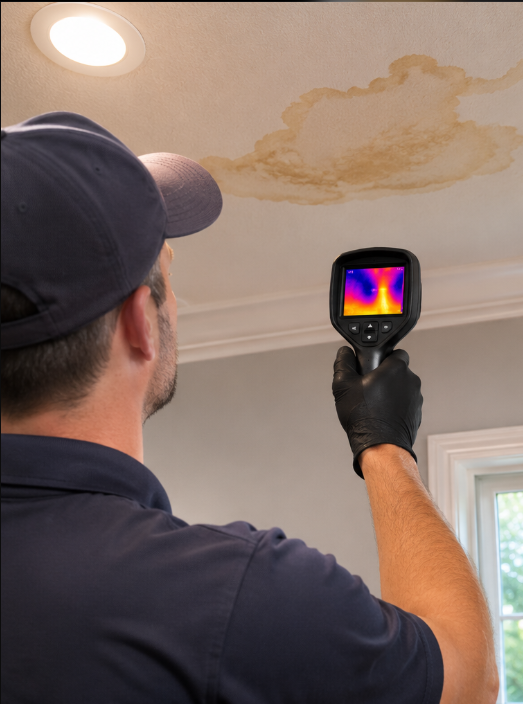
A water damage inspection looks beyond standing water to determine where moisture traveled, which materials were affected, whether hidden areas are still wet, and what restoration work may be needed. A floor or wall can look dry while moisture remains under flooring, behind baseboards, inside drywall, around cabinets, or in other concealed areas.
That is especially common after pipe breaks, refrigerator supply-line failures, dishwasher leaks, roof intrusion, and other losses where water has time to move before anyone discovers it.
A professional inspection generally begins with the source and visible damage, then expands outward to determine the likely moisture boundary. Depending on the situation, that may include visual assessment, moisture-meter readings, humidity measurements, and thermal imaging.
The ANSI/IICRC S500 Standard for Professional Water Damage Restoration includes inspections, preliminary determinations, equipment and instruments, building materials, documentation, and structural restoration within professional water-damage practice.
CleanPro Restoration Services provides water damage restoration, water extraction, reconstruction, mold remediation, and storm and fire damage restoration in Morris, Illinois, and nearby communities. For homeowners dealing with a burst pipe or appliance leak, determining how far the moisture traveled can help define what needs attention instead of relying only on what is visible.
A water damage inspection is an evaluation of the source, visible damage, hidden moisture, material condition, and safety concerns associated with a water loss.
The goal is not simply to confirm that something got wet.
An inspection helps answer questions such as:
Where did the water begin? Is the source still active? Which rooms or materials were reached? Is moisture still present behind finished surfaces? Are there electrical, structural, or contamination concerns? Which materials may remain in place, and which may require removal or reconstruction?
Professional water-damage guidance starts with identifying and correcting the source of the intrusion. IICRC notes that determining and correcting the underlying cause is generally the property owner’s responsibility, although the work may be handled by the appropriate specialized professional.
For example, if a dishwasher supply line breaks, the plumbing problem itself needs to be controlled through the appropriate trade. Water restoration then focuses on the resulting property damage.
The same distinction applies to roof leaks. The exterior roof problem needs proper repair, while water that has already reached insulation, ceilings, walls, or flooring may require restoration.
Some water damage is obvious. Other problems appear through small changes in building materials.
Common signs include ceiling or wall stains, bubbling paint, soft drywall, warped flooring, swollen trim, musty odors, discoloration, and materials that feel damp or unusual.
A single sign does not tell you exactly how much damage exists, but it can point toward an area that deserves closer inspection.
A brown, tan, or yellow ring on the ceiling commonly shows that water has moved through material above the finished surface.
The source may be directly above the stain, but not always.
Water can follow framing, roof decking, pipes, insulation, or other building components before appearing on the ceiling.
A stain that has stopped changing does not necessarily prove that the cavity above it is completely dry.
Paint may blister, peel, bubble, or separate when moisture reaches the wall or ceiling material beneath it.
Wallpaper can loosen for similar reasons.
These changes often appear after the leak has already been present for some time because the finish is reacting to moisture underneath.
Drywall that feels soft, swollen, crumbly, or visibly distorted may have absorbed water.
A wall can also show damage near the baseboard even when the water source was several feet away.
Drywall can wick moisture upward from the floor, and water can move through wall cavities.
Water can affect wood, laminate, engineered products, subfloor materials, and other flooring assemblies.
Signs may include lifting edges, cupping, crowning, separation, buckling, or changes in the way the floor feels underfoot.
The surface layer is only part of the concern. Moisture may also be present below it.
Particleboard, fiberboard, wood trim, toe kicks, and cabinet bases may swell or change shape after absorbing water.
Kitchen water losses are particularly prone to hidden spread because refrigerator lines, dishwashers, sinks, and plumbing connections can release water beneath cabinets.
A persistent musty smell can point toward damp materials or microbial growth, especially when the odor begins after a leak or water event.
EPA notes that hidden mold may occur behind drywall, beneath carpeting and padding, above ceiling tiles, around pipes, and in other concealed damp areas.
A musty smell does not prove a particular mold species is present, but it is a reason to investigate the moisture condition.

Yes. Water can move behind drywall, beneath flooring, around cabinets, through insulation, and between levels of a building without remaining visible on the finished surface.
This is one of the main reasons visual inspection alone can miss part of a water loss.
Consider a refrigerator supply-line leak.
Water may begin behind the appliance, travel beneath the finished floor, reach the bottom plate of a wall, and wick into drywall before a homeowner notices staining.
A burst pipe inside a wall can spread in another direction altogether.
The wall may show only a small wet area even though insulation and framing inside the cavity have been affected.
EPA notes that specialized equipment such as moisture meters can help locate hidden damp areas, particularly when moisture cannot be confirmed by sight alone.
The purpose of inspecting beyond the obvious wet spot is to avoid leaving moisture behind simply because the surface appears normal.
Moisture meters help determine whether building materials contain elevated moisture compared with appropriate reference conditions.
Different meter types work differently.
Some meters use pins that contact or penetrate a material. Others take non-invasive readings across the surface.
EPA specifically identifies moisture meters as useful tools for locating wet areas in materials such as wallboard, wood, carpet, brick, and concrete and for monitoring the progress of moisture reduction.
The reading has to be interpreted in context.
A number by itself does not tell the entire story.
Material type matters. A reading on wood is interpreted differently from one on drywall or masonry. Metal behind a wall can also affect some non-invasive readings.
That is why professional moisture assessment often compares suspect areas with unaffected materials and uses more than a single spot measurement.
A moisture meter can help answer questions such as:
Is the base of this wall wetter than nearby wallboard? Does the moisture pattern continue into the next room? Is the floor near the appliance different from an unaffected section? Are materials moving toward appropriate moisture conditions during restoration?
Those measurements help turn an inspection into a moisture map rather than a guess based on visible staining.
Thermal imaging can help locate temperature patterns that may point toward hidden moisture, but an infrared camera does not directly “see water.”
This is an important distinction.
The U.S. Department of Energy explains that infrared cameras detect temperature differences rather than moisture itself. Evaporative cooling can cause damp areas to appear different from surrounding dry materials, but other conditions—such as missing insulation or thermal bridging—can produce temperature differences too.
That is why thermal imaging works best as a screening tool.
A restoration professional may scan a wall or ceiling and notice an unusual cool pattern. That area can then be checked with a moisture meter or another method to determine whether moisture is actually present.
FLIR gives the same guidance: thermal cameras can reveal temperature anomalies associated with water, but moisture-meter readings are used to verify the finding.
Thermal imaging can be particularly useful for quickly scanning larger areas where opening every wall would be impractical.
It does not replace direct measurements, professional judgment, or inspection of the actual water source.
Yes. Water can travel beneath flooring even when the exposed surface appears mostly dry.
This often happens after appliance leaks, plumbing failures, and water that spreads across a hard-surface floor.
Depending on the floor assembly, moisture can reach underlayment, adhesives, subflooring, seams, wall plates, and adjacent rooms.
Layered materials can make the problem harder to judge from the surface.
A finished floor may feel dry while moisture remains beneath it.
Changes such as lifting, buckling, cupping, staining, or loose sections can be signs that the flooring system absorbed water.
An inspection may compare different sections of the floor and nearby materials to determine where conditions change.
The condition of the material then helps guide restoration decisions.
Not all water damage is permanent. Many affected materials can remain in place when the water is addressed promptly and the material can return to an acceptable condition, while other materials may need removal or reconstruction.
The answer depends on several factors:
A small amount of clean water on a durable hard surface may leave no permanent damage.
Saturated drywall that has softened or deteriorated is different.
Wood flooring may recover from some moisture exposure, while severe swelling, delamination, buckling, or prolonged saturation can change the restoration options.
Water damage is therefore better evaluated material by material rather than with a blanket yes-or-no rule.
Yes. A visible stain can remain long after the material stops being actively wet.
That is one reason color alone is not a moisture measurement.
A ceiling stain may be completely dry but still need cosmetic repair.
Another stain that looks similar may have active moisture above it.
The history of the leak, current readings, condition of surrounding materials, and whether the source has been corrected all matter.
This is also why painting over a stain before understanding the cause can be a mistake.
If water is still entering the assembly, the discoloration may return and additional damage can continue behind the finish.

Hidden water damage often begins with relatively ordinary problems.
For CleanPro’s water-damage customers, common examples include pipe breaks, refrigerator water-line failures, dishwasher leaks, and other plumbing or appliance losses.
Other possible sources include roof or storm intrusion, water around windows or doors, overflowing fixtures, and condensation.
The location where water becomes visible is not always the location where it started.
A pipe above a ceiling can leak several feet away from the eventual stain.
A roof opening may allow water to travel along framing before it reaches drywall.
A dishwasher leak may spread beneath cabinets and flooring rather than into the middle of the kitchen.
That is why tracing the source and the direction of moisture spread is part of the inspection process.
A professional inspection generally moves from source identification to safety assessment, visible damage, moisture mapping, material evaluation, and restoration planning.
The exact process varies with the loss, but a practical sequence looks like this:
This reflects the broader inspection and pre-restoration approach described by ANSI/IICRC S500.
CleanPro’s water damage restoration process begins with evaluating the affected property before the restoration scope is set.
If the water source is still active, stop it when that can be done safely.
For a pipe or appliance-line failure, that may mean shutting off the appropriate water valve.
Electrical safety comes first when water is near outlets, appliances, wiring, or the electrical panel.
CDC advises never entering standing water to reach a breaker panel and never operating electrical switches or tools while standing in water. If the main power cannot be reached from a dry location, contact a qualified electrician.
You can also document visible conditions with photographs when it is safe.
Avoid tearing out materials simply to see how far the water traveled unless there is an immediate safety reason to do so.
Opening walls or flooring before the area is assessed can make it harder to understand the original extent of the loss and may create unnecessary work.
Water damage deserves faster attention when water is still entering the property, standing water is present, electricity may be involved, ceiling materials are sagging, several rooms are affected, or contaminated water may be present.
A small refrigerator leak discovered quickly is different from a burst pipe that has been running while the house was empty.
The amount of visible water does not always reflect the amount held inside building materials.
Water can continue moving after the source has stopped.
That is why a property that looks better after the puddle is removed can still require evaluation.
For significant standing water, water damage restoration may need to begin with extraction before the remaining affected materials are addressed.
Hidden moisture can contribute to deterioration of building materials and can create conditions that support mold growth.
EPA notes that hidden damp areas behind drywall, underneath carpets, around pipes, and inside other concealed spaces can support mold when moisture remains available.
Leaving moisture inside a wall does not guarantee that a major mold problem will develop, but the area should not be assumed safe simply because it is out of sight.
Wet materials may also swell, warp, lose adhesion, stain, soften, or deteriorate.
The sooner the moisture boundary is understood, the easier it is to decide what should be monitored, restored, or reconstructed.
If a water loss has already resulted in mold growth, CleanPro also provides mold remediation for qualifying properties.
No. Material removal depends on contamination, condition, moisture exposure, and whether the material can be returned to a suitable state.
This is an important reason to inspect before automatically demolishing an area.
Some hard surfaces may require cleaning and moisture control rather than replacement.
Other materials can become too damaged to remain.
Drywall that has lost integrity, flooring that has severely delaminated, contaminated porous materials, or insulation that cannot be adequately restored can require removal.
The most disruptive option is not automatically the best option, but neither is preserving a material simply because replacement is inconvenient.
The inspection helps establish that distinction.
A small, quickly contained leak may not require extensive professional restoration, but an inspection is worth considering when you cannot tell how far the water traveled.
For example, a small amount of water spilled onto tile and cleaned up immediately may be straightforward.
A refrigerator line leaking behind an appliance for several hours is different because the water may have traveled beneath flooring.
A dishwasher leak that reached the cabinet base or adjacent wall can also extend beyond the visible area.
Consider an assessment when:
The source was hidden, the leak ran for an unknown amount of time, water reached porous materials, flooring is changing shape, walls or ceilings are stained, a musty smell appears, or the affected area does not seem to return to normal.
The question is not simply how much water you saw.
It is how much of the building assembly the water reached.
Some restoration companies offer free inspections or assessments, while others charge for site visits, diagnostic work, or detailed reports. There is no universal rule.
The scope also matters.
A brief visual estimate is different from an investigation involving extensive moisture mapping, diagnostic tools, written reporting, or specialized testing.
For CleanPro, the safest approach is to call (833) 588-2776 to request an estimate and confirm any inspection or assessment terms before scheduling.
That gives the homeowner clear information before the visit without assuming that every inspection has the same pricing structure.
An inspection can help document the observed condition of a property, including affected locations and restoration needs.
That documentation does not determine insurance coverage.
The insurance company and adjuster make decisions about coverage, deductibles, approved amounts, exclusions, and payment.
If a loss may involve insurance, photograph visible conditions when safe and report the claim according to the carrier’s instructions.
Avoid assuming that a particular type of water damage is automatically covered simply because it was professionally inspected.
Coverage depends on the policy and cause of loss.
Pipe breaks and appliance-line failures deserve particular attention because water can move quickly into areas that are difficult to see.
A broken supply line may affect the room where it occurred plus an adjacent wall, room below, or connected flooring system.
A refrigerator line can leak behind the appliance before anyone notices.
A dishwasher can release water beneath cabinets and flooring.
For these losses, the inspection should follow the path the water could reasonably have taken rather than stopping at the first visible stain.
This is especially useful when the homeowner catches the leak after the obvious standing water has already disappeared.
Storm water can enter through a damaged roof, flashing, wall opening, window area, or other exterior path and show up somewhere else indoors.
Attic insulation may become wet before the ceiling below stains.
Water can move along rafters or framing.
After an ice-dam event, liquid water can also move beneath roofing materials and into the attic before it becomes visible in the living area.
The exterior source should be handled by the appropriate trade, while interior water damage can be evaluated separately.
CleanPro provides storm damage restoration and interior water-damage restoration when qualifying weather events affect the property.
Look for stains, soft drywall, peeling finishes, warped floors, swollen trim, damp odors, and changes around cabinets or baseboards. Moisture meters and, in some cases, thermal imaging can help investigate areas that appear dry on the surface.
Thermal imaging can identify temperature patterns that may be associated with moisture, but it does not directly detect water. Suspected areas should be verified with moisture measurements or another appropriate method.
A moisture meter can help identify elevated moisture in building materials, but readings need to be interpreted according to the material and compared with appropriate reference conditions. EPA identifies moisture meters as useful tools for locating wet areas and monitoring moisture conditions.
No. A stain may remain after the moisture has gone, while other materials can suffer permanent physical damage such as swelling, delamination, loss of strength, or deterioration. The condition of the material determines whether cleaning, restoration, or reconstruction is appropriate.
Not automatically. Moisture measurements and other inspection methods may help narrow the affected area before intrusive work begins. When opening a wall is necessary, the location should be chosen based on the suspected moisture path and building conditions.
Water damage should be evaluated promptly when water is still entering the building, hidden moisture is likely, electrical or structural concerns exist, or porous materials have become wet. Early evaluation can help define the affected area before additional deterioration occurs.
Visible water is only the part of a loss you can see.
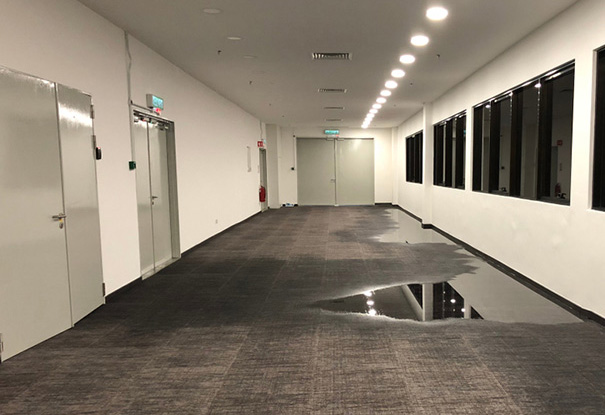
CleanPro Restoration Services serves Morris, IL, and nearby communities within about a 35–40 mile radius, including Plainfield, Shorewood, Joliet, and Naperville. The company primarily works with residential properties and also handles some commercial restoration projects.
If a burst pipe, refrigerator-line failure, dishwasher leak, storm, or another water event has affected your property, the next step is to determine how far the moisture traveled and which materials need attention.
Call CleanPro Restoration Services at (833) 588-2776 to request an estimate and confirm inspection or assessment terms for your property.