Black Mold
Quick Response to Any Disaster
- 24/7 Emergency Response
- Expert Restoration Services
- Advanced Technology
- Customer-Focused Care
- Trusted & Reliable


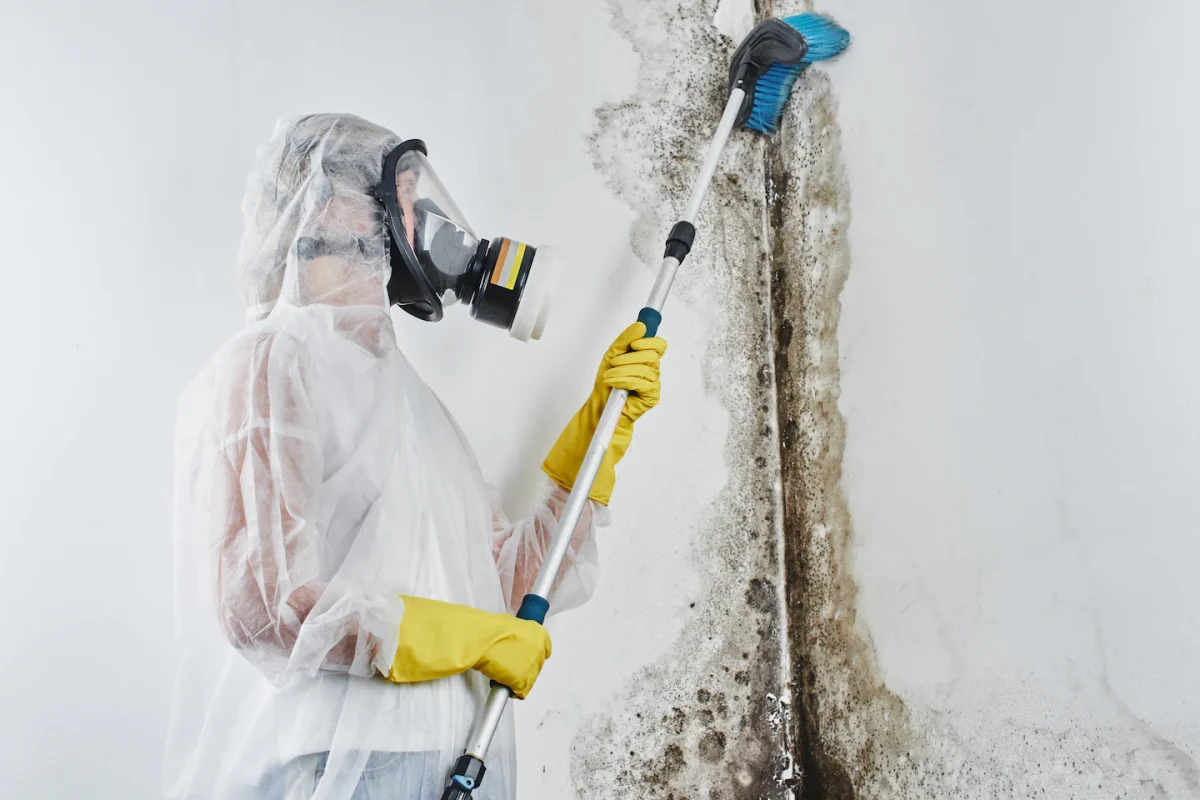
Homeowners often use “black mold” to describe dark-colored mold, but you cannot reliably identify a mold species by color alone. The term is often associated with Stachybotrys chartarum, a greenish-black mold that can grow on chronically damp materials containing cellulose, including gypsum board, fiberboard, and paper.
Finding a dark patch on drywall does not automatically mean you have Stachybotrys. Other indoor molds can appear black, dark green, gray, or brown, and dirt, staining, soot, or mineral deposits can sometimes resemble mold growth.
From a cleanup standpoint, identifying the exact species is usually less important than identifying the moisture problem and determining how much material is affected. CDC states that Stachybotrys chartarum and other indoor molds should generally be treated the same with respect to potential health risks and removal.
CleanPro Restoration Services provides mold remediation for qualifying properties in Morris, Illinois, and nearby communities. Mold often develops after leaks, appliance failures, pipe breaks, storm-related water intrusion, or other moisture problems, which makes finding and correcting the source of water an important part of dealing with recurring growth.
“Black mold” is an informal term rather than a scientific category. One mold commonly associated with that name is Stachybotrys chartarum, sometimes also called Stachybotrys atra.
CDC describes Stachybotrys chartarum as greenish-black. It grows on materials with a high cellulose content when enough moisture is present. Examples include gypsum board, fiberboard, paper, and other cellulose-containing building materials. Water damage, leaks, condensation, water infiltration, and flooding can create the damp conditions it needs.
Unlike a temporary splash of water on a surface that dries quickly, Stachybotrys is associated with persistent moisture. CDC specifically notes that constant moisture is required for its growth. That is why a dark patch found around repeatedly wet drywall or another chronically damp material deserves attention to the underlying water condition, not just the visible stain.
The word “toxic” is also frequently used with black mold, but it can be misleading.
Certain molds are described as toxigenic because they are capable of producing substances called mycotoxins under some conditions. That does not mean the mold itself should be described as poisonous, nor does the color of a colony tell you whether mycotoxins are present. CDC advises treating toxigenic molds such as Stachybotrys with the same basic removal approach used for other indoor mold growth.
For a homeowner, the important finding is usually simpler: mold is growing indoors, which means moisture is supporting that growth.
Stachybotrys chartarum is typically described as greenish-black, but appearance alone is not enough to make a reliable species identification.
Mold colonies may look spotted, irregular, fuzzy, slimy, powdery, or stained depending on the organism, surface, moisture level, and stage of growth. Several molds can also occupy the same damp area at the same time.
Dark mold around a baseboard, behind drywall, under a cabinet, or on water-damaged wallboard might be Stachybotrys, but it might also be another mold species.
There are also non-mold conditions that can look similar. EPA notes that dirt, soot, carpet stains, paint, and mineral deposits can sometimes resemble mold during a building investigation.
A musty odor can add useful context. Mold can produce microbial volatile organic compounds that create the familiar damp or musty smell associated with growth. A persistent moldy odor without an obvious visible source can justify looking for hidden moisture behind walls, beneath flooring, inside cabinets, or in other concealed areas.
What homeowners should not do is assume:
“Black color = Stachybotrys.”
That conclusion cannot be made reliably from appearance alone.
Stachybotrys is associated with chronically wet cellulose-containing materials.
CDC specifically identifies materials such as gypsum board, fiberboard, and paper. In a house, that can translate to conditions involving drywall paper, some ceiling materials, paper-backed products, and other materials exposed to long-term moisture.
Common moisture events that can create mold-friendly conditions include leaking pipes, refrigerator supply-line failures, dishwasher leaks, roof or exterior water intrusion, condensation, and flooding.
Those moisture sources matter because mold spores are already common in indoor and outdoor environments. The presence of spores alone is not unusual. Growth begins when those spores land on a surface with enough moisture.
A dark patch near the bottom of a wall after a long-running appliance leak is therefore different from a dry stain left by an old event. The question is whether the material remains wet or whether mold has actively colonized it.
Water can also move farther than homeowners expect. A pipe leak inside one wall may wet insulation, framing, drywall, flooring, or the room below before the damage becomes obvious.
This connection between moisture and mold is why treating the visible growth without addressing the water source often leads to the same problem returning.
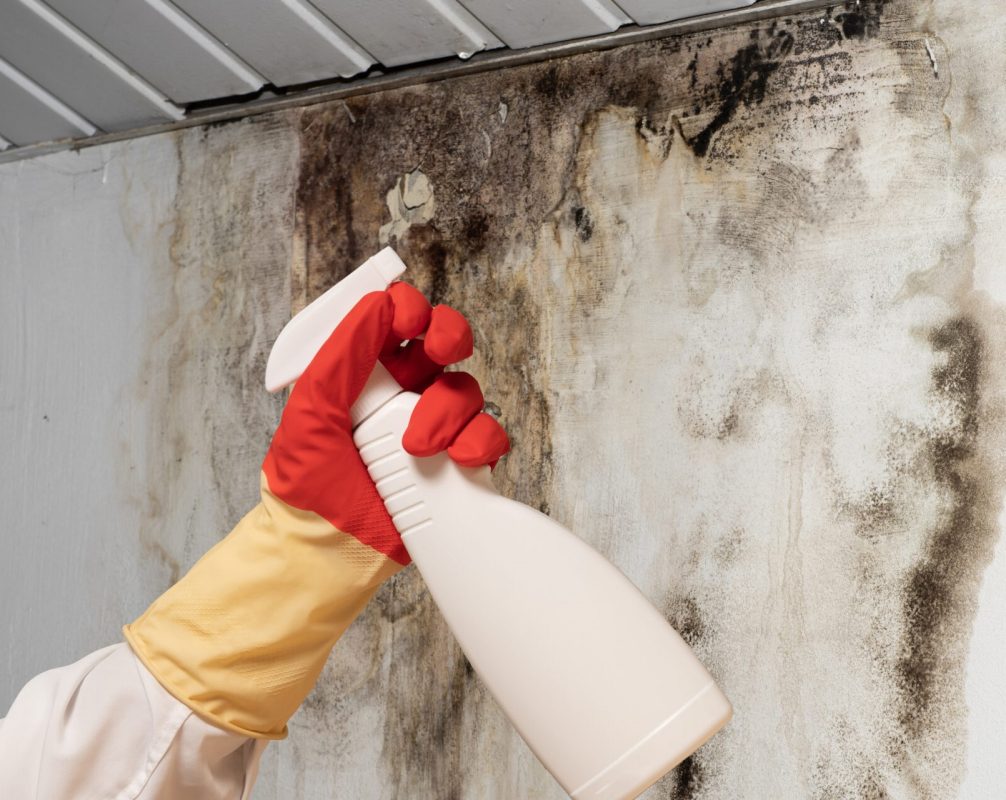
Indoor mold can affect health, but current public-health guidance does not support treating dark-colored mold as automatically more dangerous simply because it is black.
CDC states that people exposed to damp or moldy environments may experience no symptoms at all, while others may develop respiratory, allergic, or irritant symptoms. Reported effects include nasal congestion, sore throat, coughing, wheezing, burning or irritated eyes, and skin rash.
People with asthma or mold allergies can have stronger reactions. CDC also notes that people with weakened immune systems or chronic lung disease can be at greater risk for fungal infections.
EPA similarly reports that indoor molds can produce allergens and irritants and that some molds can produce mycotoxins. Mold exposure can trigger allergic reactions in sensitive individuals and may contribute to asthma attacks in people who have asthma and are allergic to mold.
These effects are associated with mold exposure generally. They should not be converted into a special list of symptoms that proves someone has been exposed to Stachybotrys.
CDC specifically states that there is currently no test that proves an association between Stachybotrys chartarum and particular health symptoms. People experiencing persistent symptoms should talk with a healthcare professional rather than relying on the color of household mold as a diagnosis.
There is no medically established checklist of symptoms that can diagnose “black mold exposure” based on symptoms alone.
This distinction matters because online searches often surface phrases such as “10 warning signs of black mold toxicity” or “symptoms of toxic mold.” Those lists can make broad symptoms appear specific to one mold species when they are not.
Documented mold-related reactions can include nasal stuffiness, runny nose, sneezing, red or itchy eyes, coughing, wheezing, sore throat, skin irritation, and other allergic or respiratory symptoms. Asthma can also worsen in susceptible individuals.
Some people experience no noticeable effects.
CDC’s guidance on Stachybotrys chartarum says symptoms linked with molds can be nonspecific and that it is not necessary to determine which species is growing in the building before addressing it.
If symptoms persist, are severe, or involve difficulty breathing, the appropriate next step is medical evaluation. A restoration company can address conditions in the building, but it cannot diagnose whether a person’s symptoms were caused by mold.
Some people should take extra precautions around a mold-damaged area.
CDC says people with asthma, COPD, or other chronic respiratory diseases, mold allergies, weakened immune systems, or certain underlying lung conditions can be at greater risk from exposure. Current CDC clinical guidance also advises people with asthma, other lung conditions, or immune suppression not to enter buildings with visible or smelled mold following severe water damage.
Children should not participate in mold cleanup after major water damage or disasters.
People with medical conditions or concerns about exposure should speak with an appropriate healthcare professional before taking on cleanup themselves.
You can identify that a material appears moldy, but you generally cannot determine the mold species reliably from color or appearance alone.
The good news is that exact species identification is usually unnecessary for ordinary cleanup decisions.
EPA states that when visible mold is present, sampling is usually unnecessary. There are no EPA or other federal limits for acceptable airborne mold or mold-spore concentrations, so a sample cannot simply be compared with a federal “safe mold level.”
CDC also does not recommend routine home mold testing. Its guidance explains that the health effects of mold differ among individuals and that testing does not tell homeowners whether a particular person will become sick.
That means a homeowner who sees obvious mold growth usually does not need a laboratory species name before correcting the moisture problem and removing the growth.
There are situations where specialized sampling may be useful—for example, when the source is unclear, litigation is involved, or a qualified professional determines testing would answer a specific question. EPA says sampling in those circumstances should be performed by professionals experienced in mold sampling and interpretation.
CleanPro’s mold work focuses on mold remediation. Where specialized air sampling or laboratory analysis is appropriate, that assessment can be handled separately based on the needs of the property.
No. CDC advises that Stachybotrys chartarum and other indoor molds should generally be treated the same with respect to potential health risk and removal.
You do not need a special “black mold killer” simply because a colony is dark.
The key steps are controlling the moisture source, determining how much material is affected, removing mold growth, cleaning materials that can be saved, and removing porous materials when they cannot be adequately cleaned.
Moisture control is essential. EPA states that mold will return when the water problem is left unresolved, even after a thorough cleanup.
This is also why painting over mold is not remediation. CDC advises cleaning up all visible mold and correcting the water problem before painting or caulking.
If mold developed after a broken pipe, refrigerator line, dishwasher leak, storm event, or another water loss, the moisture conditions and affected building materials should be evaluated as part of the restoration plan.
CleanPro provides both water damage restoration and mold remediation, allowing the property-damage side of a qualifying project to be addressed when water and mold are connected.
A small mold area may be suitable for homeowner cleanup, but the decision is based more on size and conditions than on the mold’s color.
EPA says that if an affected area is smaller than about 10 square feet, approximately a three-foot-by-three-foot area, homeowners can handle many cases themselves by following appropriate cleanup guidance. Larger areas, extensive water damage, hidden mold, HVAC contamination, or mold involving sewage or other contaminated water deserve additional caution and may call for professional help.
Someone attempting small-area cleanup should protect their eyes, skin, and respiratory system. CDC recommends at least an N95 respirator, protective gloves, and goggles that keep dust and small particles out of the eyes.
For small mold growth on a hard surface, CDC recommends cleaning with water and detergent and removing all visible mold, followed by prompt drying.
Porous materials require more judgment. Mold can grow into wallboard, carpet, ceiling tiles, and similar materials. EPA notes that moldy absorbent materials may have to be discarded when they cannot be adequately cleaned.
For a deeper explanation of household mold cleaners, see Does Bleach Kill Mold?.
Safe mold removal begins with the water problem, not the mold’s color.
If a plumbing leak caused the moisture, the plumbing source needs to be corrected through the appropriate trade. If exterior water entered the property, the source of that intrusion needs to be controlled. Restoration can then focus on the affected building materials.
The cleanup approach depends on the extent of growth and what materials are involved.
Hard, cleanable surfaces can often be physically cleaned. Mold-contaminated porous materials may require removal when growth cannot be adequately separated from the material. The affected space should also be kept from spreading dust and debris into unaffected parts of the property during larger remediation work.
Personal protection matters whenever mold is being disturbed. CDC recommends respiratory, eye, and skin protection, including at least an N95 respirator, goggles, and protective gloves for mold cleanup.
The goal after remediation is not to create a sterile building. Mold spores naturally exist in the environment. The goal is to remove active indoor growth, deal with damaged materials, and eliminate the moisture condition that allowed the mold to grow.
For qualifying properties, professional mold remediation can address mold-affected materials as part of the broader property-restoration process.
A professional mold-remediation company may be appropriate when the growth is extensive, keeps returning after cleaning, follows a substantial water loss, extends into walls or other hidden spaces, or affects materials that cannot easily be cleaned.
EPA’s homeowner guidance uses about 10 square feet as a useful dividing point. Below that size, many straightforward cleanup projects can be handled by the homeowner. When the area is larger or the property has experienced extensive water damage, professional remediation becomes more reasonable.
HVAC involvement is another reason for caution. EPA advises against operating an HVAC system when it is known or suspected to contain mold because the system may distribute contamination through the building.
Hidden mold can also change the project. Opening walls, removing wallpaper, or disturbing concealed mold can release spores and fragments into the surrounding area. EPA recommends considering experienced professional help when hidden growth is suspected.
Another common reason to call is repeated growth after a water event. If mold comes back in the same location after surface cleaning, the moisture source or affected material may still need attention.
No. The size, location, moisture source, and affected materials matter more than color alone.
A small patch on a hard surface caused by temporary condensation can have a very different scope from widespread mold behind drywall after a long-running pipe leak.
Finding something black on a wall also does not prove it is Stachybotrys.
This is why reputable mold decisions are based on the property conditions rather than fear around the words “black mold.”
A small, accessible area may be manageable with appropriate homeowner cleanup. Widespread growth, extensive water damage, contaminated water, hidden mold, or affected HVAC components may require a larger remediation response.
No. “Black mold” is a descriptive term, not a reliable species identification. Stachybotrys chartarum is greenish-black, but other molds can also appear dark, and color alone cannot determine the species.
Usually not when visible mold is already present. EPA says routine sampling is generally unnecessary because the immediate priorities are removing the mold and fixing the moisture problem. Testing can be useful in selected situations when it would answer a specific question.
Mold exposure can cause allergic, respiratory, and irritant symptoms in some people, while others may experience no symptoms. Asthma, mold allergy, chronic lung disease, and immune suppression can increase concern. There is no specific symptom pattern that proves exposure to Stachybotrys chartarum.
Visible indoor mold should be addressed promptly, especially when the underlying area remains wet. Mold can damage the materials it grows on, and leaving the moisture problem unresolved allows growth to continue.

CleanPro Restoration Services provides mold remediation for qualifying residential properties and some commercial projects in Morris, Plainfield, Shorewood, Joliet, Naperville, and nearby communities within its Morris-area service territory.
If black or dark-colored mold developed after a pipe break, appliance leak, storm, or another water problem, focus first on stopping the moisture source and determining how far the damage extends.
Call CleanPro Restoration Services at (833) 588-2776 to discuss mold remediation for your property.