Emergency Board-Up and Roof Tarping
Quick Response to Any Disaster
- 24/7 Emergency Response
- Expert Restoration Services
- Advanced Technology
- Customer-Focused Care
- Trusted & Reliable


Emergency board-up and roof tarping are temporary measures used to protect a damaged property from additional rain, wind, debris, animals, and unauthorized entry until permanent work can be completed. Board-up is generally used for broken windows, doors, wall openings, and other exposed areas. Roof tarping is used when damage has left part of the roof vulnerable to additional water intrusion.
Both measures are meant to buy time.
They do not rebuild a damaged wall, replace a roof, or restore water-damaged ceilings. Their immediate purpose is to reduce the chance that an already damaged property becomes worse while permanent repairs and restoration are being planned.
Illinois Department of Insurance guidance specifically tells property owners to make necessary temporary repairs after a disaster, including boarding windows and holes in walls or roofs, and to keep receipts for those emergency measures.
FEMA similarly describes temporary roof coverings as short-term protection intended to reduce additional damage until permanent repairs can be made.
Temporary protection is often urgent, but it should never come before safety. A damaged roof can be unstable, electrical lines may be down, and wind or rain can make roof access dangerous. The exact timing depends on property conditions, weather, access, and the availability of a qualified contractor.
CleanPro Restoration Services provides storm damage restoration, fire damage restoration, water extraction, water damage restoration, and reconstruction for qualifying properties in Morris, Illinois, and nearby communities. When a storm or fire leaves an opening that allows water into the property, the temporary exterior protection and the resulting interior restoration are two separate parts of the recovery process.
Emergency board-up means temporarily covering a broken or exposed opening with sturdy material, commonly plywood, so the property is less exposed until permanent repairs can be completed.
Storms can break windows, damage doors, tear siding or exterior materials away, or create larger openings when trees and debris strike a building.
Fire damage can also leave windows, doors, walls, or other parts of a structure open after firefighters finish their work.
In other situations, a broken window or damaged doorway may leave the property exposed even though the roof remains intact.
Board-up helps close those openings temporarily.
The goal is not to make the damaged area look finished. The goal is to reduce exposure to weather and prevent an open building from remaining unnecessarily vulnerable.
Illinois DOI specifically includes boarding windows and holes in walls or roofs among temporary repairs property owners should consider after a disaster.
Board-up may be appropriate when a property has:
The material and fastening method depend on the opening and the condition of the surrounding structure.
Emergency roof tarping places a temporary waterproof covering over a damaged section of roof to reduce additional rain or snow entry until permanent roof work can be completed.
A tarp may be considered when wind removes roofing material, falling branches puncture part of the roof, fire damages a section, or another event creates an opening that allows weather into the building.
FEMA describes plastic roof coverings and tarps as temporary fixes designed to protect a damaged building from the elements while permanent repairs are arranged.
A properly placed tarp is not the same as throwing a sheet of plastic over the roof.
The covering needs to extend beyond the damaged section and remain secured against changing weather conditions. The surrounding roof also needs to be stable enough for work to take place safely.
Roof tarping is temporary by design.
It should not be mistaken for a replacement roof or permanent repair.
The answer depends on where the building has been opened to the weather.
Board-up is usually intended for vertical or structural openings such as windows, doors, or damaged wall sections.
Roof tarping is aimed at roof openings and areas where roofing materials no longer provide adequate temporary weather protection.
A severe storm may require both.
For example, a falling tree could damage a roof while also breaking a second-floor window. The roof opening may need temporary covering, while the broken window may require boarding.
The interior damage then needs separate attention.
Rain may already have reached insulation, drywall, ceilings, floors, or other materials before the exterior was secured.
Temporary protection reduces continued exposure. It does not remove water that has already entered the building.
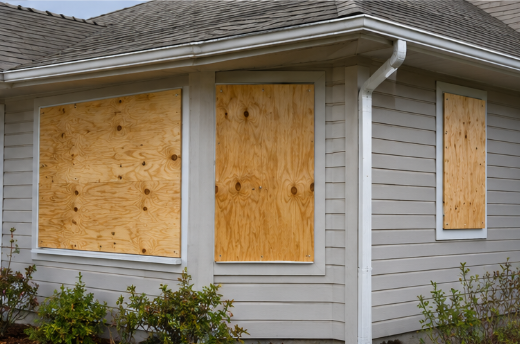
Once the exterior envelope of a house is damaged, every additional period of rain or snow can increase the restoration scope.
A broken window can allow wind-driven rain into flooring and walls.
A roof opening can allow water to enter the attic and reach insulation or ceilings.
An exposed wall can continue taking on moisture during later weather.
Illinois DOI tells homeowners to take reasonable measures to protect property from further damage after a loss.
FEMA makes the same basic point with temporary roof covering: install temporary protection promptly when it can safely prevent additional damage.
This concept is often referred to as mitigating further damage.
It does not mean a homeowner should put themselves in danger.
Temporary protection should be reasonable for the conditions. An unstable roof, downed electrical line, active fire condition, severe wind, or damaged structure changes what can safely be done.
Safety comes before temporary repairs.
After a severe storm, fire, tree impact, or structural event, look at the property from a safe distance before approaching damaged areas.
Watch for downed power lines, broken gas lines, leaning trees, unstable walls, roof sections that appear collapsed, broken glass, and sagging ceilings.
The American Red Cross recommends returning to a damaged property only after authorities say it is safe and checking the exterior for structural and utility hazards before entering.
Documentation should also happen when it can be done safely.
Take photographs or video of the damaged roof, windows, walls, interior water intrusion, and affected property before significant cleanup or temporary work begins.
Illinois DOI recommends photographing conditions before temporary repairs and keeping all bills and receipts associated with the work.
This can help create a clearer record of what happened before temporary protection changed the appearance of the damage.
The exact method depends on the size and condition of the opening.
For a broken window or door opening, the first concern is whether loose glass, framing, masonry, siding, or other materials create a safety hazard.
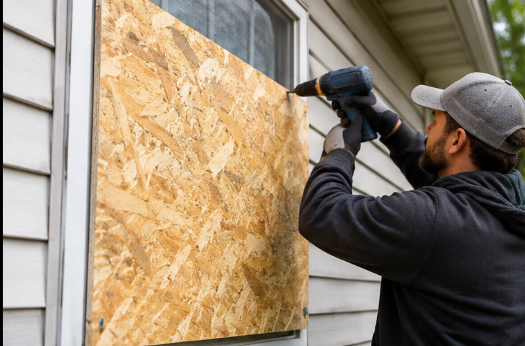
Once the opening can be accessed safely, a suitable panel such as plywood may be measured to cover the exposed area.
The goal is to create a temporary barrier that remains secure without causing unnecessary additional damage to surrounding building components.
Large openings may require a more substantial support approach than a single broken window.
A fire-damaged opening may also have weakened framing that needs evaluation before anything is fastened to it.
Board-up is therefore not simply about attaching plywood wherever there is a hole. The surrounding material needs to be able to support the temporary covering.
For homeowners, the safest role is often documenting the damage, keeping people away from the opening, and arranging qualified help rather than working around broken glass or unstable structural materials.
Roof tarping begins with assessing whether the roof can safely support workers at all.
OSHA’s roof-tarping guidance specifically says workers should not be allowed onto a damaged roof until its strength and structural integrity have been assessed. Roof work also carries fall and electrical hazards.
If the roof is safe enough for temporary work, the damaged area is identified and a waterproof covering is placed so that water is directed over the covering rather than underneath it.
The tarp needs to extend far enough beyond the damage to provide useful protection.
It also needs to be secured well enough to remain in position under reasonable weather conditions.
The exact technique varies with roof slope, roof type, damage location, and surrounding structure.
OSHA specifically warns against installing tarps during active high wind or rain and recommends avoiding roof access whenever the task can safely be completed from a more stable position.
This is one reason homeowners should be very cautious about DIY roof tarping after severe weather.
Roof tarping can involve serious fall, structural, and electrical hazards, so homeowners should avoid climbing onto a damaged roof when conditions are unsafe or when they lack proper equipment and training.
A roof that looks intact from the ground may have damaged decking.
Wet roofing materials can be extremely slippery.
Tree limbs can create hidden weak areas.
Nearby power lines may also be down or energized.
OSHA specifically identifies falls and electrocution among the main hazards associated with temporary roof-tarp installation. It also warns that damaged roof integrity must be evaluated before workers access the surface.
Wind creates another major problem.
A large tarp can catch wind like a sail, making it difficult to control while someone is working near a roof edge.
If conditions are windy, rainy, snowy, or icy, temporary roof work may need to wait until qualified workers can perform it safely.
Preventing water damage is important. Preventing a serious injury is more important.
A roof tarp is temporary protection, not a permanent roofing system.
How long it remains useful depends on the material, installation, sunlight, wind, temperature, roof slope, and subsequent weather.
FEMA describes temporary roof coverings as short-term measures used while a homeowner arranges permanent repairs.
A tarp should therefore be checked periodically if permanent work cannot begin immediately.
Look from the ground for obvious movement, loose edges, tears, or areas where water may be getting underneath.
Avoid climbing up simply to inspect it.
If the covering no longer appears secure, contact the contractor responsible for the temporary protection.
Permanent roof work should be scheduled through an appropriate roofing professional rather than treating the tarp as a long-term replacement.
Temporary roof protection stops or reduces additional exposure, but it does not remove water already inside the property.
Water may have reached the attic before the tarp was installed.
Insulation may be wet.
Ceiling drywall may be stained or soft.
Water may have traveled through walls or reached flooring below.
Once the exterior source is controlled, the interior needs its own assessment.
This is where water damage restoration becomes important.
CleanPro’s water damage restoration work can address qualifying interior damage after storm-related water intrusion. Water extraction, moisture mitigation, removal of affected materials when necessary, and reconstruction may be part of the recovery depending on what became wet.
If ceiling materials are sagging or heavily saturated, stay clear of the area until it can be evaluated.
Water trapped above drywall can add considerable weight.
Fire can leave a property exposed even after the flames are extinguished.
Windows may be broken.
Doors may be damaged.
Firefighters may need to create openings while controlling the fire.
Parts of the structure may also be unsafe to enter.
Temporary board-up is commonly used in disaster recovery to close exposed openings while the fire restoration process moves forward.
The building should first be cleared for safe access.
The Red Cross advises people not to return to fire-damaged property until authorities say it is safe. Structural, gas, electrical, and other hazards may remain after the fire is out.
Once temporary protection is handled, fire-damaged materials, smoke residue, water from firefighting, and reconstruction needs can be evaluated separately.
CleanPro provides fire damage restoration and reconstruction for qualifying properties.
Board-up is also used outside storm and fire restoration.
A broken storefront window, damaged residential door, vehicle impact, vandalism, or similar event may leave a building open to weather or unauthorized access.
In those situations, temporary board-up serves the same basic purpose: close the opening until permanent glass, door, wall, or structural work can be completed.
The cause changes, but the temporary-protection principle remains the same.
Property owners should photograph the damage first when safe and contact the appropriate insurer or property representative when insurance may be involved.
For specialized security, glass, door, or structural work, use a contractor suited to that type of permanent repair.
The cost varies based on the size of the opening, roof access, amount of material needed, height, structural condition, weather, labor, and complexity of securing the property.
A single ground-floor window is a different job from several damaged windows on a multi-story house.
A small accessible roof puncture is different from a large damaged roof section after a tree impact.
Emergency conditions can also affect labor and access.
For those reasons, a single price range can be misleading without knowing what has been damaged.
When requesting a quote, useful details include the number and approximate size of openings, whether the roof is involved, how many stories the property has, whether a tree or debris is present, whether utilities are affected, and whether water is actively entering the building.
Ask for the scope and pricing terms before work begins whenever conditions allow.
Homeowners insurance may cover reasonable temporary measures associated with a covered loss, but coverage depends on the policy, cause of damage, deductible, exclusions, and insurer requirements.
Illinois DOI tells policyholders to make necessary temporary repairs to protect property from further loss, photograph conditions beforehand when possible, and save all bills and receipts.
The Department also advises contacting the insurance company as soon as possible after a disaster.
Temporary protection and permanent repair should not automatically be treated as the same thing.
Illinois DOI advises homeowners not to move ahead with major permanent repairs without first communicating with the insurer because authorization requirements can affect payment.
The insurance company makes the coverage and payment decision.
Keep copies of photos, contractor invoices, receipts, and written scopes related to emergency work.
Not necessarily. If reasonable temporary work is needed to prevent additional damage, Illinois DOI advises property owners to protect the property while documenting the conditions and keeping receipts.
Waiting several days with a broken window or open roof can allow an otherwise limited loss to grow.
Rain may enter.
Wind may damage interior finishes.
Animals or debris may get inside.
At the same time, temporary protection should remain temporary.
Document the loss, contact the insurer promptly, and avoid unnecessary permanent construction until the insurance process and repair scope are clear.
FEMA similarly advises documenting damage before cleanup and installing a temporary roof covering promptly when it is needed to prevent further loss.
This distinction is important.
A plywood panel covering a broken window does not replace the window.
A tarp covering damaged shingles does not repair the roof.
Temporary protection gives the property time to move from emergency stabilization into proper repair and restoration.
Once the immediate exposure has been controlled, the damaged areas need to be evaluated.
A roofing professional may need to address permanent roof damage.
A window or door professional may be needed for permanent exterior openings.
If the event caused interior water damage, fire damage, mold growth, or damage requiring reconstruction, those conditions need their own restoration plan.
Restoration becomes necessary when the event has already affected interior materials or building components beyond the temporary exterior opening.
Look for ceiling stains, wet insulation, soft drywall, peeling paint, damp flooring, water around windows, wall discoloration, or a musty odor after the event.
Some damage is obvious immediately.
Other water may remain concealed inside walls, ceilings, or flooring systems.
A roof tarp can stop additional rain from entering while water already inside remains trapped.
That is why temporary protection and restoration often happen as separate stages of the same recovery.
CleanPro provides storm damage restoration for qualifying damage affecting homes and some commercial properties.
Where damaged materials need removal and replacement, reconstruction can follow the restoration work.
Board-up closes exposed openings such as broken windows, doors, and damaged wall areas. Roof tarping temporarily covers damaged portions of a roof to reduce additional water entry. A property may require one or both depending on the damage.
Temporary protection should be arranged as soon as it can be done safely when the roof is exposed to additional weather. FEMA advises installing temporary roof covering promptly when it is needed to prevent further damage.
No. A tarp is short-term weather protection. Permanent roofing work still needs to be completed by an appropriate roofing professional. FEMA describes these coverings as temporary measures until permanent repair can be made.
Do not climb onto a roof during hazardous wind, rain, snow, or other conditions. OSHA specifically warns against tarp installation during storms and identifies falls, unstable roof surfaces, and electrical hazards as major risks.
When a broken window leaves the building exposed, temporary board-up can reduce further weather exposure and help secure the opening until permanent glass or window work can be completed.
It may when the temporary measure is reasonable and connected to a covered loss, but the insurance carrier decides coverage and reimbursement. Illinois DOI advises documenting the damage, keeping receipts, and communicating with the insurer.
Check the interior for water intrusion and damaged materials. Photograph affected areas, continue communicating with the insurer, arrange permanent exterior repairs through the appropriate trade, and address interior restoration before moisture-related damage becomes larger.
Emergency board-up and roof tarping are best understood as temporary protection between the damaging event and permanent recovery.

CleanPro Restoration Services serves Morris, IL, and nearby communities within about a 35–40 mile radius, including Plainfield, Shorewood, Joliet, and Naperville. CleanPro primarily works with residential properties and also handles some commercial restoration projects.
When a storm or fire has already caused interior water damage or damaged materials, CleanPro can address qualifying storm damage restoration, water extraction, water damage restoration, fire damage restoration, and reconstruction needs.
Call CleanPro Restoration Services at (833) 588-2776 to discuss restoration after storm, water, or fire damage.