Ice Dams
Quick Response to Any Disaster
- 24/7 Emergency Response
- Expert Restoration Services
- Advanced Technology
- Customer-Focused Care
- Trusted & Reliable



An ice dam forms when snow melts on a warmer part of a roof, flows toward the colder eaves, and refreezes into a ridge of ice that blocks drainage. Water can then collect behind the ice and work beneath roofing materials, eventually reaching the attic, insulation, ceilings, and walls.
Ice dams are more than a row of icicles along the gutter. The real property-damage problem is the liquid water trapped behind the ice.
The University of Minnesota Extension explains that ice dams form when upper roof surfaces rise above 32°F while lower roof areas remain below freezing. Snow melts on the warmer roof, runs downward, and freezes again at the colder edge. As the dam grows, additional meltwater can back up behind it and enter openings in the roof covering.
The U.S. Department of Energy describes the same process: heat reaching the roof deck can melt snow, while the colder roof overhang causes that water to freeze again. The backed-up water may then move beneath shingles and into the attic.
For homes around Morris, Illinois, ice dams are a realistic winter property concern. The National Weather Service Chicago office specifically warns homeowners in northern Illinois to watch for roof snow loading and ice damming because ice dams at roof edges can result in water damage.
CleanPro Restoration Services provides water damage restoration, water extraction, storm damage restoration, mold remediation, and reconstruction for qualifying properties in Morris and nearby communities. When an ice dam allows water into the home, the interior water damage can require attention even after the exterior ice problem has been handled.
An ice dam is a ridge of frozen water that forms near the lower edge of a snow-covered roof and prevents additional meltwater from draining normally.
The University of Minnesota Extension defines an ice dam as ice at the roof edge that blocks melting snow from leaving the roof. Water trapped behind the dam can leak into walls, ceilings, insulation, and other areas of the home.
The ice itself is only part of the problem.
Above the dam, liquid water may remain beneath the snow because the upper part of the roof is warm enough for melting. That water is now sitting where a sloped roof is supposed to shed it.
Roofing systems are designed primarily to move water downward. When water is forced backward or sideways beneath shingles, it may reach roof underlayment, sheathing, the attic, insulation, or finished interior materials.
An ice dam may be easy to see when large icicles are hanging from the roof edge, but not every dam is obvious from the ground. Snow can cover much of the ice buildup.
That is why indoor signs can sometimes appear before the homeowner realizes what is happening outside.
A clogged gutter can make roof drainage problems worse, but gutters are not the main cause of most ice dams.
Ice dams are fundamentally caused by uneven roof temperatures and repeated melting and refreezing.
The National Weather Service recommends keeping gutters and downspouts clear because this gives melting snow a path to drain away.
However, simply cleaning the gutters does not correct attic heat loss.
A house can still develop an ice dam on a roof without gutters if warm roof surfaces repeatedly melt snow above a colder eave.
Think of clean gutters as part of winter maintenance, not as the complete ice-dam solution.
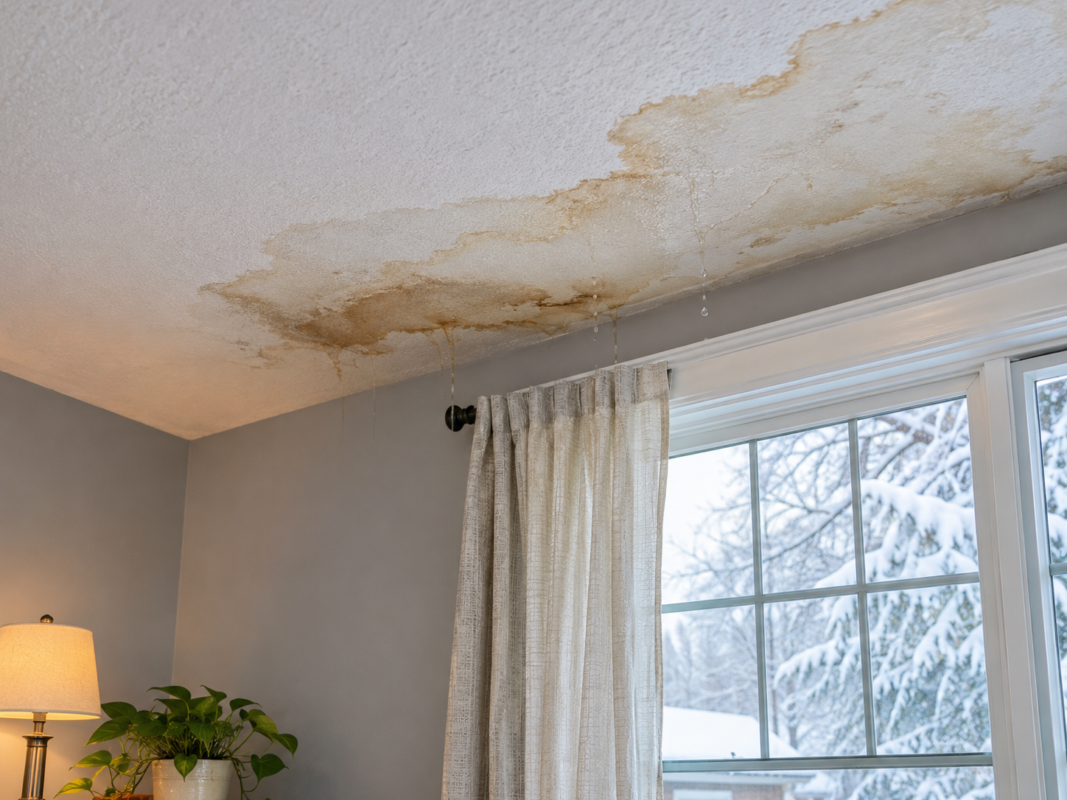
Large icicles, thick ice along the roof edge, and interior water stains during freezing weather are common warning signs of an ice dam.
You may notice a band of ice building along the eaves or in the gutters. Icicles may grow longer after sunny winter days or periods when temperatures fluctuate around freezing.
Indoors, watch for water staining near exterior walls, damp attic insulation, bubbling paint, wet drywall, peeling finishes, or discoloration along ceilings.
The U.S. Department of Energy lists wet attic insulation, mold or mildew on attic materials, damaged wood, warped roof-edge materials, and other moisture signs as possible evidence of water intrusion.
Not every icicle means water has already entered the house. But heavy icicle formation can indicate that roof snow is melting and refreezing.
The Department of Energy specifically identifies icicles as a warning that conditions favorable to ice dams are occurring.
An ice dam causes interior damage when liquid water trapped behind the frozen ridge moves beneath roofing materials and enters the building.
The water may first reach the roof sheathing and attic.
From there, it can wet insulation, rafters, ceiling drywall, wall cavities, trim, paint, flooring, or belongings below.
The National Weather Service notes that repeated freeze-and-thaw cycles can eventually push water beneath shingles and into the attic, where it may damage ceilings, walls, and contents.
Water may also travel before it becomes visible.
A ceiling stain is not always directly below the exterior entry point. Water can follow framing, roof sheathing, wiring penetrations, insulation, or other paths before it reaches the finished ceiling.
That makes ice-dam water damage similar to other hidden water losses: what you can see may be smaller than the affected area inside the assembly.
Wet insulation may lose effectiveness and can hold moisture against surrounding materials.
The right response depends on the type of insulation, the amount of water, how long it remained wet, and whether contamination or deterioration occurred.
A small amount of moisture does not automatically mean all insulation must be replaced. But saturated material should not simply be ignored because the ceiling stain below has stopped growing.
The University of Minnesota advises taking prompt action when ice-dam water enters the home and drying wet or damp portions of the structure to reduce the chance of mold and mildew growth.
From a restoration standpoint, the goal is to determine which materials were affected, reduce remaining moisture, and remove or reconstruct materials that cannot reasonably be restored.
Yes. Any water intrusion that leaves building materials damp can create conditions that support mold growth.
Ice-dam leaks can wet drywall, insulation, wood, and concealed wall or ceiling materials.
The University of Minnesota Extension notes that moisture from ice dams can contribute to mold and mildew when wet areas are not dealt with promptly.
The presence of an ice dam does not mean mold automatically develops.
How long materials stay wet, the amount of water involved, temperature, material type, and existing conditions all matter.
If a winter leak is followed by a persistent musty smell, visible spotting, damp insulation, or recurring staining, the affected area deserves closer inspection.
CleanPro provides mold remediation when mold becomes part of a qualifying property-restoration project.
Ice-dam removal should focus on reducing roof snow or creating drainage without climbing onto an icy roof or damaging roofing materials.
Winter roof work carries fall hazards, and ice can release unexpectedly.
University of Minnesota Extension specifically warns that people working on or around icy roofs risk injury and can also damage the roof. It recommends contacting professionals for roof work when needed.
One short-term option is reducing snow from the roof.
The National Weather Service recommends long-handled roof rakes that allow snow removal while the user stays on the ground.
Even roof rakes require care. University of Minnesota Extension notes that roof rakes and similar tools can damage roofing materials if used improperly.
If a significant ice dam is already present, especially when water is entering the home, a qualified roofing or ice-dam professional can determine the safest exterior removal approach.
CleanPro’s role is on the property-restoration side when water has entered the building and damaged interior materials.
No. Chipping aggressively at an ice dam with a hammer, axe, shovel, or similar tool can damage shingles, gutters, flashing, and other roof components.
It can also send large pieces of ice falling toward people, windows, siding, landscaping, or vehicles below.
Ice is often bonded to roofing materials. Trying to break it loose by force can damage the roof beneath it.
The safer goal is controlled snow and ice management rather than smashing the ice from the roof.
If removal requires climbing onto the roof, working from a ladder in icy conditions, or cutting deeply into the ice, professional help is the safer choice.
A roof rake can help remove snow before it melts and feeds an ice dam, especially when it can be used while standing safely on the ground.
NWS guidance recommends long-handled roof rakes as one way to reduce roof snow and lower the chance of ice-dam formation.
The goal is usually to remove some snow from the lower roof area rather than scrape the roofing surface bare.
Avoid pulling aggressively against shingles.
Also stay clear of overhead power lines, falling snow, icicles, and large ice sections.
Roof raking is a short-term winter measure. It does not correct the attic heat loss that caused the snow to melt unevenly.
Using warm water to create temporary drainage channels is sometimes discussed as an emergency measure, but it is not a permanent solution.
University of Minnesota Extension notes that, when water is actively entering the structure, channels can sometimes be made through the ice so trapped water can drain. It specifically describes using tap water during suitable weather as a temporary method and notes that the channel may refreeze within days.
Homeowners should be cautious with any technique that requires standing beneath heavy ice or working from a ladder.
Pouring large volumes of water onto a freezing roof can also create more ice when temperatures drop again.
If interior water intrusion is active, the safer approach may be to address the indoor water damage while a qualified exterior professional deals with the ice dam.
First protect people and belongings, then address the exterior water source and the wet interior materials.
A practical order is:
Do not ignore the interior once the exterior leak stops.
Materials inside the ceiling or wall can remain wet after the visible dripping ends.
CleanPro’s water damage restoration services focus on the interior property damage that follows water intrusion.

A ceiling should be treated cautiously when it becomes stained, soft, bowed, bubbling, or visibly saturated.
Water can collect above drywall and add weight to the ceiling material.
Do not stand beneath a badly sagging ceiling.
A stain that appears small may also indicate moisture above a much larger section of drywall or insulation.
Even when the ceiling remains structurally intact, moisture inside the assembly should be evaluated before cosmetic repairs begin.
University of Minnesota Extension specifically advises allowing ceilings and walls to dry before repairing the interior and correcting the heat-loss problem so the same damage does not recur.
Repainting a stain without dealing with moisture above it may hide the symptom while leaving the underlying condition unresolved.
Long-term ice-dam prevention focuses on reducing heat transfer from the living space to the roof and maintaining a roof assembly that stays as uniformly cold as practical.
The strongest prevention measures are usually attic air sealing, adequate insulation, and appropriate ventilation for the roof design.
Department of Energy guidance says good air sealing, adequate attic insulation, and ventilation can reduce the heat reaching the roof deck and lower the chance of snow melting unevenly.
Air sealing is especially important.
Warm indoor air can leak through ceiling penetrations around lights, wiring, plumbing, attic hatches, wall tops, and other gaps. That warm air reaches the attic and raises roof temperatures.
Adding insulation without first addressing major air leaks may leave part of the problem in place.
University of Minnesota Extension recommends first making the ceiling plane airtight and then improving insulation where appropriate.
Ventilation can help maintain more uniform temperatures in a properly designed vented attic, but ventilation is not a substitute for air sealing.
The same source cautions against using mechanical attic ventilation as the primary ice-dam solution because it can create other moisture and pressure problems.
Adequate insulation can reduce heat loss to the roof, but insulation works best when air leakage is also controlled.
Poor insulation allows heat to move upward through the ceiling.
Warm air leaking directly into the attic can move even more heat.
That is why ice-dam prevention often requires both insulation and air sealing.
The Department of Energy also notes that insulation should maintain good coverage near the eaves. Missing or compressed insulation at the roof edge can create cold and warm spots that contribute to uneven roof temperatures.
An insulation or home-performance professional can assess attic conditions rather than simply adding more material without checking the existing assembly.
Proper ventilation can help in many vented-roof assemblies by keeping attic temperatures closer to outdoor conditions.
NWS guidance recommends good airflow from soffit areas toward roof vents to help reduce the freeze-thaw cycle associated with ice dams.
However, ventilation alone cannot compensate for large amounts of warm air leaking from the house.
The stronger approach is to reduce heat loss first and then make sure the roof assembly has the ventilation intended for its design.
Unvented roof assemblies work differently and should be evaluated according to their specific insulation and air-control design.
No. Gutters themselves are not the underlying cause of ice dams.
They can become filled with ice and contribute to drainage problems, but the root cause is typically uneven roof temperatures.
Keeping gutters and downspouts clear before winter can help melting water drain properly.
Removing gutters while leaving major attic heat loss unresolved does not fix the underlying freeze-thaw pattern.
Focus first on the roof and attic conditions creating the melting.
Large icicles are a warning sign that snow is melting and refreezing at the roof edge, but they do not prove that interior water damage has already occurred.
The Department of Energy calls icicles a telltale sign that conditions associated with ice-dam formation are present.
A few small icicles can occur without a major leak.
Repeated large icicles combined with thick ice along the eaves, roof snow above, and ceiling or attic moisture deserve closer attention.
The key concern is whether liquid water is being trapped behind the ice.
Coverage depends on the policy, cause of loss, exclusions, and maintenance conditions.
Some homeowners policies may cover sudden interior water damage associated with an ice dam, while treatment of the roof itself, repeated maintenance issues, mold, or long-term deterioration can be handled differently.
The insurer—not the restoration company—determines whether a particular loss is covered and what payment applies.
If interior damage occurs, photograph the affected areas and contact the insurance carrier promptly to ask what documentation is needed.
CleanPro’s role remains focused on restoration work within the property.
Professional water damage restoration may be appropriate when an ice dam has allowed water into ceilings, walls, insulation, flooring, or other interior building materials.
Call sooner when water is actively dripping, drywall is sagging or soft, insulation is saturated, multiple areas are affected, or moisture has entered concealed spaces.
The exterior ice problem and the interior water problem may need different professionals.
A roofing or ice-dam specialist can address the roof condition. A restoration company can focus on what happened inside the building after water entered.
CleanPro also provides storm damage restoration when winter weather causes qualifying interior property damage.
Ice dams form when upper parts of a snow-covered roof become warm enough to melt snow while the colder eaves remain below freezing. Meltwater flows down and refreezes at the roof edge, building a ridge of ice.
Yes. Water trapped behind an ice dam can move beneath roofing materials into the attic, wet insulation, and eventually stain or damage ceilings and walls.
No, not unless you are properly trained and equipped for winter roof work. Ice-covered roofs create a serious fall hazard, and improper removal can damage shingles and other roof components. University of Minnesota Extension recommends professional help for hazardous roof work.
It may eventually melt as temperatures rise, but waiting can allow additional water to collect behind it and enter the home. If water intrusion is already occurring, both the exterior source and interior damage should be addressed.
Reduce the heat reaching the roof. Air sealing, sufficient insulation, and an appropriately designed ventilation system help keep roof temperatures more uniform and reduce repeated snowmelt at the upper roof.
They can create the wet conditions mold needs. Mold is not guaranteed, but wet insulation, drywall, wood, and other materials should be dealt with promptly to reduce the chance of fungal growth.
Ice dams are a roof problem that can quickly become an interior water-damage problem.
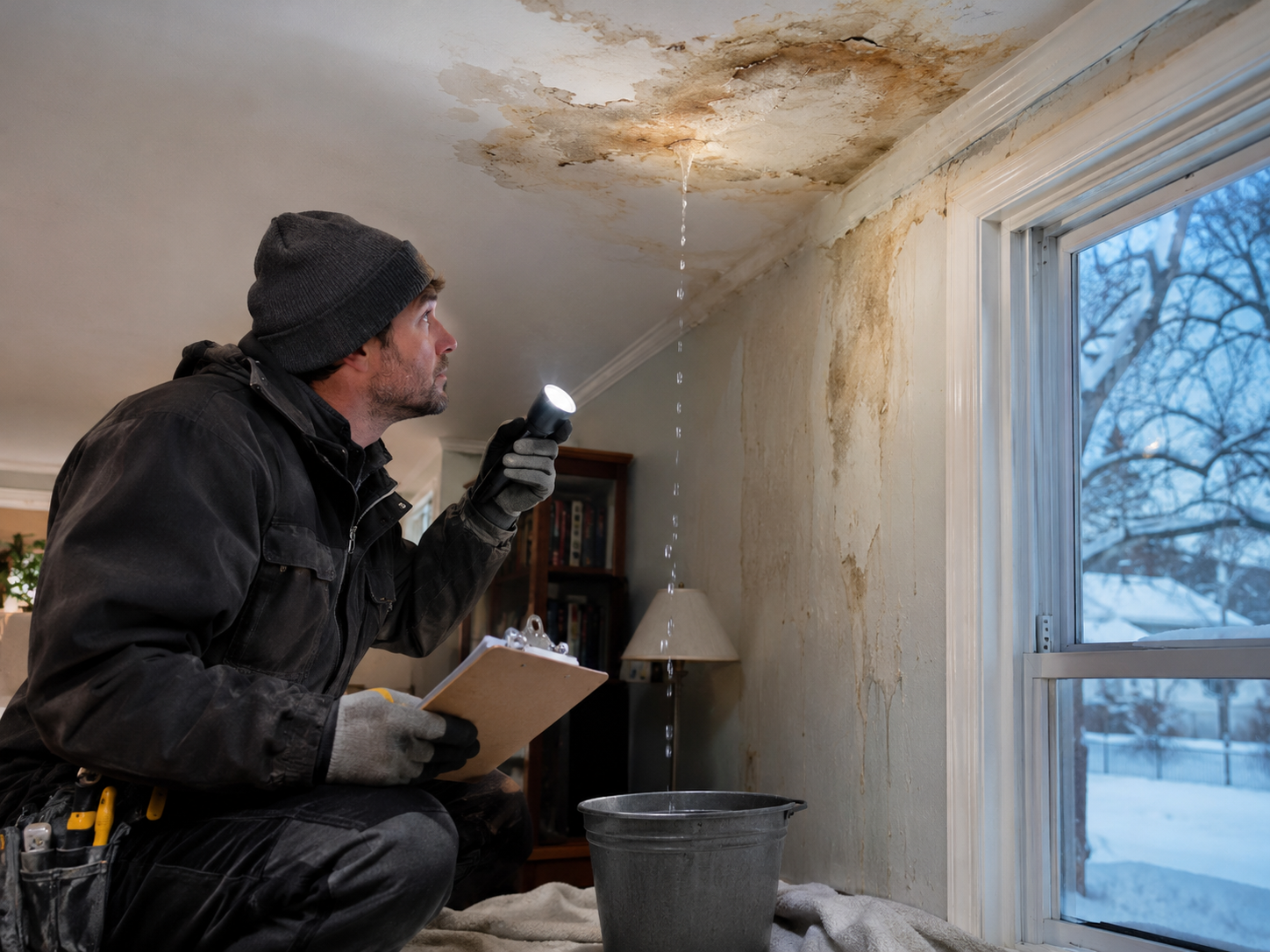
CleanPro Restoration Services serves Morris, IL, and nearby communities within about a 35–40 mile radius, including Plainfield, Shorewood, Joliet, and Naperville. CleanPro primarily works with residential properties and also performs some commercial restoration work.
If an ice dam has allowed water into your attic, ceiling, walls, or other interior materials, the next step is to stop the exterior source and evaluate how far the moisture traveled inside the property.
Call CleanPro Restoration Services at (833) 588-2776 to discuss water damage restoration or reconstruction after an ice-dam leak.