Mold vs Mildew
Quick Response to Any Disaster
- 24/7 Emergency Response
- Expert Restoration Services
- Advanced Technology
- Customer-Focused Care
- Trusted & Reliable


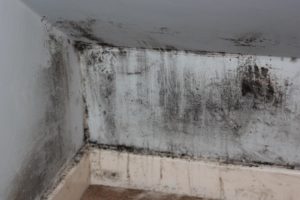
Mold and mildew are often talked about as if they are completely different problems, but the difference is not that simple. Mildew is a term commonly used for certain types of mold or fungal growth, especially flat growth found on damp surfaces. Mold is the broader term for microscopic fungi that can grow on many indoor materials when moisture is present.
In everyday homeowner language, “mildew” often describes a lighter, flatter patch that appears on shower walls, windowsills, tile, or other damp surfaces. “Mold” is more commonly used when growth is thicker, irregular, widespread, or associated with drywall, wood, insulation, carpet, and other building materials.
Those visual patterns can help describe what you are seeing, but appearance alone cannot reliably identify the fungal species or tell you how serious the problem is.
Black mold adds another layer of confusion. Dark growth is sometimes immediately labeled “toxic black mold,” yet mold color does not tell you whether it is Stachybotrys chartarum or whether it poses a greater health risk. CDC advises treating Stachybotrys and other indoor molds similarly when deciding how to handle growth.
The most useful questions are usually: Where is the moisture coming from? How much material is affected? Is the growth limited to a cleanable surface, or has it reached porous building materials?
CleanPro Restoration Services provides mold remediation for qualifying properties in Morris, Illinois, and nearby communities including Plainfield, Shorewood, Joliet, and Naperville. When mold follows a pipe break, appliance leak, storm, or another water problem, correcting the moisture condition and dealing with affected materials are more important than deciding whether the stain should be called mold or mildew.
Mildew is generally considered a type or form of mold rather than an entirely separate organism.
EPA explains that the word mildew is often used generically for mold growth with a flat growth habit. Mildew commonly appears in damp areas such as shower walls and windowsills, while the broader category of mold includes many species capable of growing on organic materials throughout a home.
That means statements such as “mildew is harmless but mold is dangerous” are too simplistic.
Both terms refer to fungal growth associated with moisture. The difference homeowners notice is often where the growth appears, how it looks, how deeply the affected material is involved, and how difficult it is to clean.
A thin patch on bathroom tile may be described as mildew. Fungal growth covering damp drywall after a leaking pipe will usually be called mold. Biologically, however, those labels do not create a clean line between two unrelated organisms.
Moisture remains the common factor. EPA notes that mold spores are present in indoor and outdoor air but will not continue growing without moisture. When water or excessive humidity is controlled, fungal growth is much easier to prevent.
The terms are easiest to understand by comparing how homeowners typically encounter them.
|
Feature |
Mold |
Mildew |
|
What the term usually means |
Broad term for microscopic fungi growing indoors or outdoors |
A common term for certain molds, especially flatter surface growth |
|
Typical appearance |
Spots or patches in many colors; may look fuzzy, irregular, powdery, or slimy |
Often described as flatter or more surface-level growth |
|
Common locations |
Drywall, wood, ceiling tile, carpet, insulation, walls, basements, and damp building materials |
Showers, tile, windowsills, bathroom surfaces, and other humid areas |
|
Material involvement |
May grow into porous materials |
Often noticed on exposed surfaces |
|
Smell |
Frequently associated with a musty odor |
Can also smell musty |
|
Health considerations |
Mold exposure can cause allergic, respiratory, or irritant effects in some people |
Mildew is fungal growth too, so the name does not make exposure automatically harmless |
|
Treatment |
Depends on size, material, moisture source, and extent |
Small surface areas may often be cleaned when the moisture condition is corrected |
The key difference is therefore usually scope and material involvement, not a hard biological boundary.
Mold can grow into porous materials such as drywall, carpet, insulation, and wood, which makes cleanup more complicated. EPA notes that fungal growth can enter spaces and crevices within porous materials, and some affected materials may be difficult or impossible to clean completely.
Surface growth on tile or another hard material is often easier to physically remove.
Mold does not have one standard appearance.
CDC says indoor mold can appear as spots of many different colors. Common indoor molds include Cladosporium, Penicillium, and Aspergillus, and many different species can grow where there is adequate moisture.
Depending on the organism and surface, mold may appear:
Dark green or black, white, gray, brown, orange, or another color. It may look fuzzy, powdery, spotted, slimy, irregular, or stain-like.
Color alone should not be used to decide what species is present or how dangerous it is.
CDC specifically states that mold color does not necessarily indicate whether one mold is more or less dangerous than another.
Location can be more useful than color.
Mold around the lower edge of drywall may point toward an appliance leak, plumbing problem, flooding, or repeated moisture. Growth on attic materials may point toward condensation or water intrusion. Mold around a bathroom can develop where repeated humidity and surface moisture are not controlled.
When mold returns to the same place after repeated cleaning, the moisture condition deserves more attention than the color of the stain.
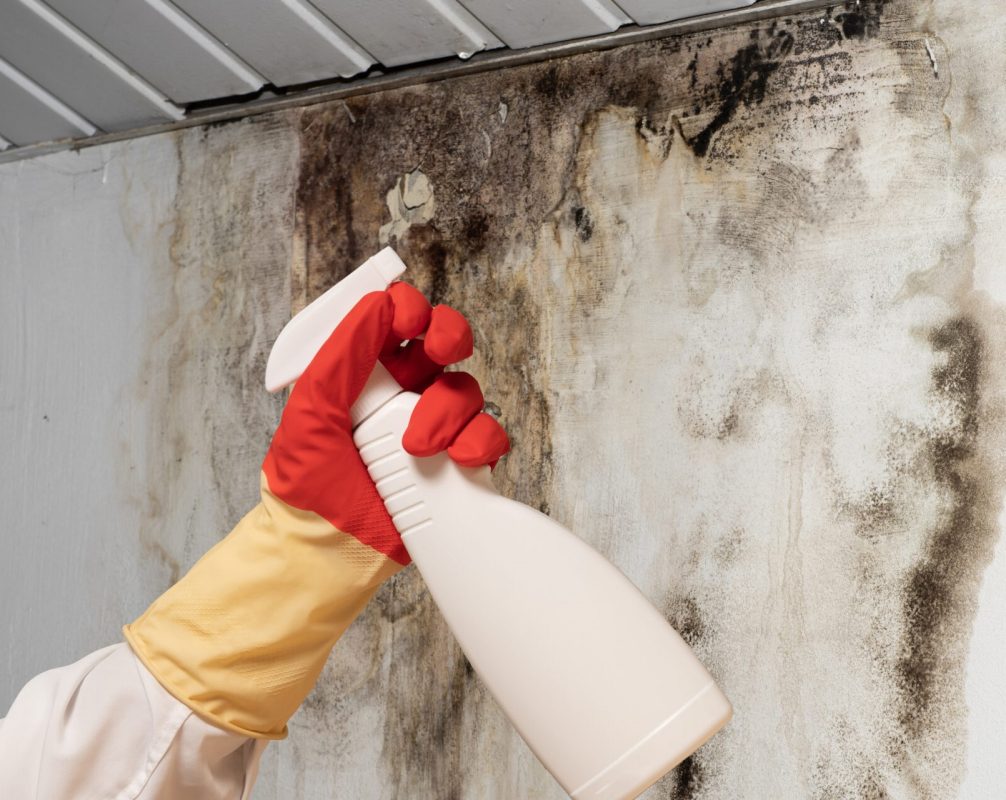
Mildew is commonly used to describe flat fungal growth found on surfaces that repeatedly become damp.
EPA specifically mentions shower walls and windowsills as common locations where what people call mildew may develop.
A homeowner may see a light-colored film, gray patch, darker spotting, or another flat layer on grout, tile, caulk, painted surfaces, or around a window.
The appearance alone still does not confirm what species is growing.
This matters because many online descriptions claim that mildew is always white or gray while mold is always green or black. Real fungal growth does not follow such a simple color chart.
The practical distinction is more often that mildew is noticed early on an accessible surface, while a larger mold problem may involve porous materials or extend beyond the area that can be easily wiped.
If surface growth returns shortly after cleaning, check for condensation, persistent humidity, leaking plumbing, or another source of moisture.
Black mold and mildew cannot be reliably distinguished by color alone.
When people say “black mold,” they often mean Stachybotrys chartarum. CDC describes Stachybotrys chartarum as a greenish-black mold that can grow on high-cellulose materials such as gypsum board, fiberboard, and paper when persistent moisture is present.
Mildew, by comparison, is a general term often applied to flatter fungal growth on damp surfaces.
A dark patch in a shower could therefore be casually called mildew even though it is fungal growth. A greenish-black patch on chronically wet drywall might raise questions about Stachybotrys, but visual inspection alone cannot prove the species.
For that reason, the difference that matters most to a homeowner is not:
“Is this technically mildew or black mold?”
It is:
“Is this a small surface problem, or is moisture affecting the building material?”
Stachybotrys chartarum requires persistent moisture for growth and is associated with water-damaged cellulose materials. If a dark patch appears on drywall that has been repeatedly wet from a leak, the moisture history becomes a more useful clue than color alone.
For more detail on dark-colored mold and Stachybotrys, see Black Mold: Identification, Health Risks, and Safe Removal.
Both mold and what homeowners call mildew can produce a musty, damp, earthy odor.
A strong musty smell is often more useful as evidence of excess moisture or fungal activity than as a way to distinguish mildew from mold.
EPA notes that mold in poorly ventilated areas can create a strong musty odor.
If the smell remains after visible surface growth has been cleaned, there may be another damp area nearby. Moisture can exist beneath flooring, behind drywall, inside cabinets, around plumbing, or in other concealed locations.
A persistent odor with no visible growth can justify checking the building for water problems.
A refrigerator supply-line leak, dishwasher leak, pipe break, or other small water event can remain hidden long enough for damp materials to produce an odor before obvious growth is visible.
CleanPro’s primary water-damage work includes water extraction and restoration, which can become relevant when the moisture source behind a mold problem began with a property water loss.
The terms mold and mildew should not be used to make medical conclusions about exposure.
Because mildew is a term used for certain fungal growths, it is not automatically harmless simply because someone calls it mildew instead of mold.
CDC reports that exposure to damp and moldy environments may cause health effects in some people and no symptoms in others. Documented reactions can include nasal stuffiness, sore throat, coughing, wheezing, burning or irritated eyes, and skin rash. People with mold allergies or asthma can have stronger reactions.
People with weakened immune systems or certain chronic lung conditions can also face greater risks from mold exposure. Invasive fungal infections are uncommon in healthy people but can be serious for those with weakened immune systems.
Those facts do not mean a patch of bathroom mildew will make everyone sick.
Health effects vary substantially by person, exposure conditions, and other factors. A restoration article also cannot determine whether someone’s symptoms were caused by mold.
Anyone experiencing persistent or serious health symptoms should discuss those concerns with a healthcare professional.
From a property standpoint, the appropriate response is simpler: unwanted indoor fungal growth should be cleaned up, and the moisture condition should be corrected.
Both need moisture, but homeowners tend to use the terms in different places.
Mildew is often noticed on exposed surfaces where humidity and condensation occur repeatedly. Bathrooms are a common example because showers produce large amounts of moisture. Window areas may develop surface growth when condensation repeatedly forms on cold glass or frames.
Mold can also develop in those locations, but larger mold problems are often associated with water that has reached porous building materials.
CDC lists paper, cardboard, ceiling tiles, wood, drywall, carpet, fabric, insulation, and upholstery among materials where mold can grow when enough moisture is available.
Water sources may include plumbing leaks, roof leaks, window leaks, condensation, flooding, or water entering after a storm.
For CleanPro customers, pipe breaks, refrigerator supply-line failures, and dishwasher leaks are particularly relevant because those losses can send water beneath flooring or into wall assemblies before the damage becomes obvious.
The visible mold may therefore be only one part of a larger moisture problem.
Whether a homeowner calls the growth mold, mildew, or black mold, moisture is the condition that allows it to continue growing.
EPA states that the key to controlling indoor mold is controlling moisture. Mold spores are always present to some degree, but without sufficient moisture, they cannot establish active growth.
That is why repeatedly cleaning a patch without changing the moisture conditions often produces disappointing results.
Consider a bathroom with poor ventilation. Surface growth may keep appearing because the walls remain damp after every shower.
Now consider drywall next to a dishwasher with a slow connection leak. Surface cleaning will not solve the problem if the wallboard remains wet from behind.
The same principle applies after a pipe break or storm-related water intrusion. Removing visible water is only part of restoring the property. Wet materials must be evaluated, and materials that cannot be successfully restored may require reconstruction.
The name of the fungus does not change that basic sequence.
Small amounts of surface fungal growth on a hard, cleanable material can often be handled by the homeowner when the moisture condition is straightforward.
EPA recommends cleaning mold from hard surfaces with detergent and water and drying the surface completely.
The moisture condition also needs attention. In a bathroom, that could mean using an exhaust fan that vents outdoors, reducing persistent humidity, improving airflow, or correcting condensation.
If the surface becomes damp again every day, cleaning alone will not keep the growth from returning.
Bleach is sometimes used by homeowners, but it should not be treated as the entire solution. EPA does not recommend biocides such as chlorine bleach as a routine mold-remediation practice. Physical removal and moisture control remain the main goals.
For more detail, see Does Bleach Kill Mold? What the EPA Recommends Instead.
Mold treatment depends on the size of the affected area, the material involved, the moisture source, and whether growth is visible or concealed.
A small mold patch on a cleanable hard surface may be manageable using EPA homeowner guidance.
EPA uses approximately 10 square feet, about a three-foot-by-three-foot area, as a general homeowner-cleanup guideline. In many cases, an area smaller than that can be handled without professional remediation. Larger areas, extensive water damage, hidden growth, or contaminated-water conditions deserve additional caution.
Porous materials require more judgment.
Mold can grow into drywall, carpet, insulation, ceiling tile, and similar materials. When growth penetrates those materials or they have deteriorated from water exposure, simply wiping the surface may not be enough.
Professional remediation may involve evaluating the affected material, controlling the work area, removing materials that cannot be cleaned, cleaning surfaces that can remain, and correcting the moisture condition that supported the growth.
CleanPro provides mold remediation for qualifying residential properties and some commercial projects within its Morris-area service territory.
Usually not when visible fungal growth is already present.
EPA says that if visible mold growth is present, sampling is generally unnecessary. There are no federal standards defining an acceptable airborne mold-spore concentration that could be used as a universal pass-or-fail number.
That means testing is generally not required simply to decide whether visible fungal growth should be cleaned.
Testing can sometimes be useful when the source is unclear, hidden growth is suspected, litigation is involved, or a qualified professional needs to answer a specific question. EPA recommends that sampling in those cases be handled by people with experience in mold sampling methods and interpretation.
For an ordinary homeowner decision, the presence of visible mold plus an active moisture problem is usually enough reason to act.
Professional help becomes more reasonable when the affected area is extensive, the growth keeps returning, a substantial water loss occurred, mold extends into porous materials, or the problem appears to be hidden behind walls or beneath flooring.
HVAC involvement also deserves caution. Mold associated with an air-handling system can create different containment and cleanup considerations than a small patch on bathroom tile.
People with asthma, chronic respiratory conditions, mold allergies, weakened immune systems, or other health concerns should also be cautious about participating directly in cleanup. CDC recommends that certain higher-risk individuals avoid mold cleanup activities.
You do not need to wait until you know whether the growth should technically be called mildew, mold, or black mold.
If the affected area is large, building materials are damaged, the moisture source is not obvious, or the growth returns after cleaning, a professional remediation discussion is reasonable.
Sometimes the cleanup is simpler, but the word “mildew” does not automatically mean the fungal growth is harmless. EPA uses mildew as a term for certain types of mold, often those with a flatter growth habit. A small surface patch may be easier to clean than mold that has affected porous materials.
Not in the sense that one organism simply transforms into Stachybotrys chartarum. Different molds can grow under different moisture and material conditions. A persistently wet surface can support increasing fungal growth, so recurring “mildew” should still be treated as a moisture warning rather than ignored.
Color alone does not establish how dangerous a mold is. CDC says mold color does not reliably indicate health risk, and Stachybotrys chartarum should be treated similarly to other indoor molds with respect to removal.
Surface fungal growth on a hard, cleanable material may often be physically removed with detergent and water, followed by complete drying. If it quickly returns, persistent moisture or another water condition should be investigated.
Appearance can suggest how people commonly use the terms, but it cannot reliably identify a fungal species. Flat surface growth is often called mildew, while thicker or more established growth is commonly called mold. In either case, look for the moisture source and evaluate how much material is affected.
A small patch on a bathroom surface and widespread growth on water-damaged drywall are very different restoration problems even though both involve fungi.

CleanPro Restoration Services provides mold remediation, water damage restoration, water extraction, and reconstruction for qualifying properties in Morris, IL, and nearby communities including Plainfield, Shorewood, Joliet, and Naperville.
If the problem started after a pipe break, appliance leak, storm, or another water event, deal with the moisture source first and determine how far the affected area extends.
For recurring mold, widespread growth, damaged porous materials, or mold associated with a larger water loss, call CleanPro Restoration Services at (833) 588-2776 to discuss mold remediation for your property.