Types of Mold
Quick Response to Any Disaster
- 24/7 Emergency Response
- Expert Restoration Services
- Advanced Technology
- Customer-Focused Care
- Trusted & Reliable


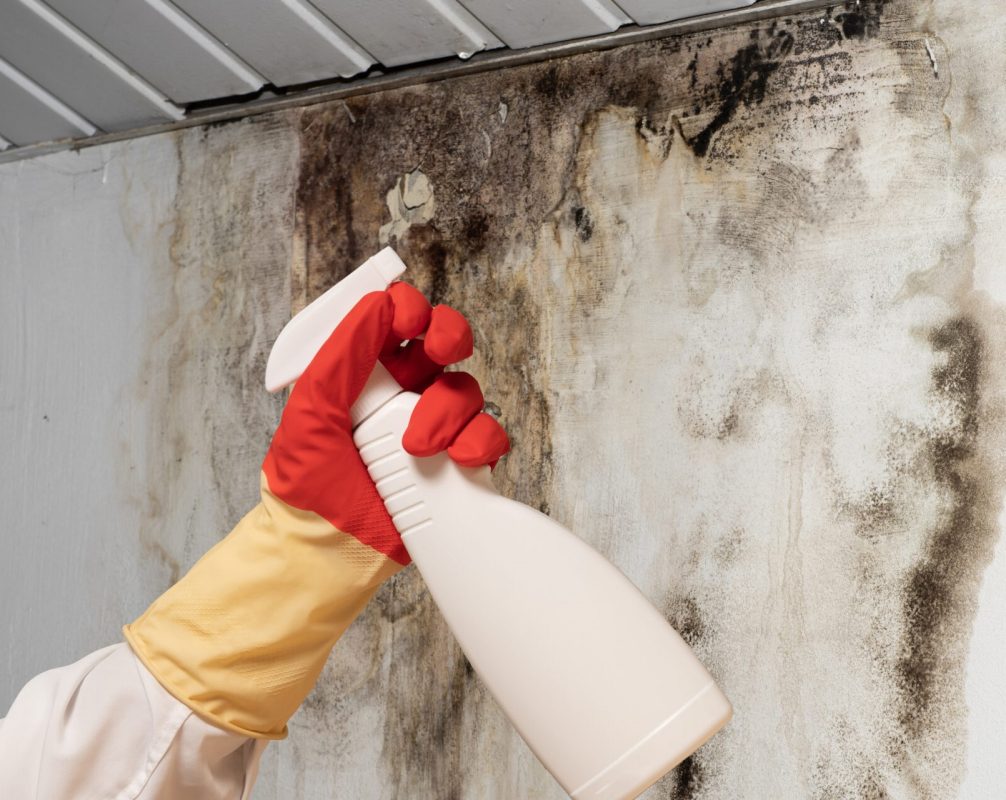
There are many types of mold that can grow indoors, but homeowners usually encounter a smaller group repeatedly in damp buildings. CDC identifies Cladosporium, Penicillium, and Aspergillus among the most common indoor molds. Stachybotrys chartarum, often associated with the phrase “black mold,” can also grow indoors when cellulose-containing materials remain wet for extended periods.
One important point is that mold cannot be reliably identified by color alone. The same genus may appear differently depending on the material, moisture conditions, age of the colony, lighting, and other factors. EPA notes that molds occur in many colors, including white and black, and that appearance can change over time.
For homeowners, identifying the exact species is usually less important than answering three practical questions: Why is mold growing here? How far has it spread? Can the affected material be cleaned, or does it need to be removed?
Mold spores exist naturally indoors and outdoors. Indoor growth begins when spores find enough moisture and a suitable material to grow on. Leaking pipes, refrigerator supply lines, dishwasher leaks, roof or exterior water entry, condensation, and flooding can all create those conditions. EPA describes moisture control as the key to controlling indoor mold.
CleanPro Restoration Services provides mold remediation for qualifying properties in Morris, Illinois, and nearby communities including Plainfield, Shorewood, Joliet, and Naperville. When mold develops after a water event, removing the visible growth is only part of the work. The moisture condition and affected building materials also have to be dealt with.
Cladosporium, Penicillium, and Aspergillus are among the most common indoor molds identified by CDC. Other molds, including Stachybotrys chartarum, may appear under particular moisture conditions.
The word “type” can be confusing because common mold names do not all describe the same taxonomic level.
Aspergillus, Penicillium, and Cladosporium are genera, meaning each group contains multiple species. Stachybotrys chartarum is a particular species. “Black mold,” “green mold,” and “white mold,” meanwhile, are descriptive phrases based mainly on appearance rather than reliable scientific identification.
That distinction matters because looking at a dark or white patch does not tell you exactly which organism is present.
Here is a practical comparison:
|
Mold type |
What homeowners should know |
|
Cladosporium |
One of the most common indoor mold genera |
|
Penicillium |
Common indoors and frequently found where moisture is present |
|
Aspergillus |
Common indoors and outdoors; includes many different species |
|
Stachybotrys chartarum |
Greenish-black mold associated with persistently wet cellulose materials |
|
White mold |
Describes appearance, not one mold genus or species |
All of these should be viewed through the same basic property-restoration lens: indoor mold means moisture is supporting fungal growth somewhere in the building.
Cladosporium is one of the mold genera CDC identifies as common indoors.
It is also widespread outdoors, so spores can enter a house naturally through doors, windows, ventilation systems, clothing, shoes, and normal air movement. The presence of spores does not automatically indicate an indoor mold problem. The concern begins when mold is actively growing on a damp indoor surface.
Like other molds, Cladosporium can vary in color and appearance. It should not be identified confidently from a photograph or color alone.
Homeowners may discover mold growth around windows, walls, damp building materials, or other surfaces where condensation or water has remained. Rather than trying to determine the genus from appearance, check why the area is staying damp.
Repeated growth around a window, for example, may point toward condensation. Growth on a wall after plumbing damage may indicate that moisture reached the drywall or surrounding building materials.
The treatment decision depends on the affected material and extent of growth rather than the name Cladosporium itself.
Penicillium is another genus listed by CDC among the most common indoor molds.
There are many species within the genus, and they cannot be reliably distinguished by a homeowner simply by looking at the colony.
Penicillium may grow where building materials or household contents stay damp. CDC notes that mold in general can grow on paper, cardboard, ceiling tiles, wood, drywall, carpet, fabric, insulation, wallpaper, upholstery, and other materials when enough moisture is available.
That list explains why mold after a water loss can spread beyond the first visible spot.
A dishwasher connection might leak beneath cabinets. A refrigerator supply line may release water beneath flooring. A pipe inside a wall can soak drywall and insulation before a stain becomes visible.
When materials remain wet, mold has an opportunity to grow regardless of which genus eventually becomes dominant.
For homeowners, finding Penicillium does not create an entirely different restoration procedure. The moisture source still has to be corrected, affected materials need evaluation, visible growth has to be removed, and materials that cannot be adequately cleaned may require replacement.
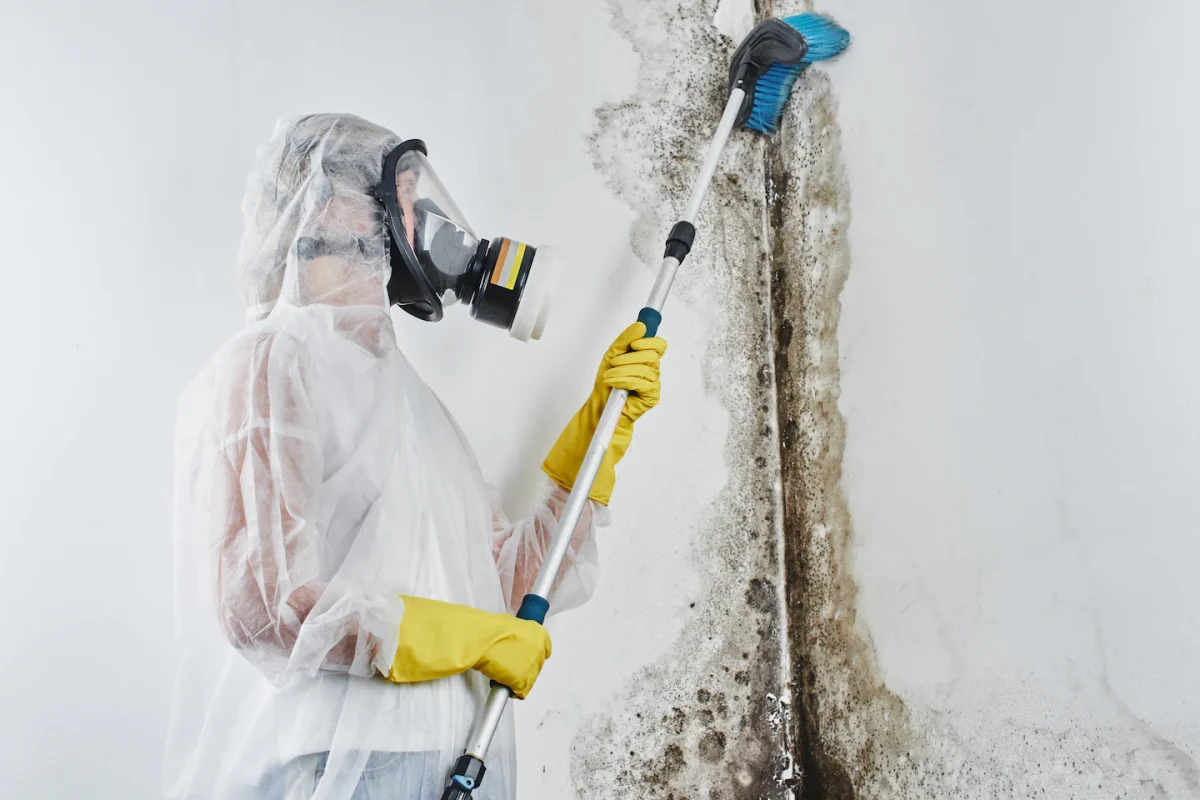
Aspergillus is common in both indoor and outdoor environments, and most people breathe in Aspergillus spores without becoming sick. CDC says the genus contains approximately 180 species, with fewer than 40 known to cause infections in humans.
Aspergillus fumigatus is the species most commonly associated with human aspergillosis, but the presence of household Aspergillus should not be treated as evidence that someone has an infection.
Most healthy people are exposed to Aspergillus spores regularly without developing aspergillosis. People with weakened immune systems and certain lung diseases have a greater risk of serious Aspergillus-related disease.
That distinction is important on a homeowner restoration page.
Finding mold in a home is a building-moisture problem. Diagnosing an Aspergillus infection is a medical matter handled by healthcare professionals.
From a property standpoint, Aspergillus growth is handled by correcting excess moisture and removing indoor growth just as with other molds.
People with severe immune suppression should be particularly cautious about entering mold-damaged buildings or participating in mold cleanup. CDC advises people with weakened immune systems to avoid buildings with mold until remediation has been completed.
Stachybotrys chartarum is a greenish-black mold that grows on persistently wet materials containing cellulose. CDC specifically names fiberboard, gypsum board, and paper as examples.
This is the mold most often associated with the popular phrase “black mold.”
That phrase can cause confusion because not every dark mold is Stachybotrys. Other mold genera can also appear dark green, brown, gray, or black.
CDC states that Stachybotrys chartarum requires constant moisture for growth. Water damage, leaks, condensation, infiltration, and flooding can create suitable conditions.
That moisture requirement gives homeowners a more useful clue than color.
Dark growth on drywall that has remained wet because of a long-running pipe leak deserves investigation of the moisture and material damage, whether laboratory testing eventually identifies Stachybotrys or another mold.
Certain molds, including Stachybotrys, can produce mycotoxins under some environmental conditions. CDC stresses, however, that these molds themselves should not simply be described as “toxic” or poisonous and that color does not establish danger. Mold capable of producing mycotoxins should be handled with the same basic moisture-control and removal principles as other indoor mold.
For a deeper discussion, see Black Mold: Identification, Health Risks, and Safe Removal.
White mold is a description of appearance, not the name of one mold species.
EPA specifically notes that molds occur in many colors, including white. “White mold” can therefore refer to different molds at different stages of growth rather than one organism with one predictable behavior.
This is similar to the problem with the phrase “black mold.”
Color can describe what a homeowner sees, but it does not reliably identify the species or tell you whether the mold is more dangerous.
White fungal growth may appear fuzzy, powdery, spotted, or film-like depending on the organism and material. Some non-mold substances can also resemble pale fungal growth.
One common example is efflorescence on masonry. Mineral salts can move through damp concrete or masonry and leave a white powdery deposit on the surface. That is not the same thing as mold.
Because appearance can be misleading, the more useful questions are whether the material is damp, whether the growth is changing or spreading, whether a musty odor is present, and whether there is a known water problem.
A future dedicated white-mold guide can explore those look-alikes in more detail. On this page, the key point is that white does not identify the species.
No. Mold color can help describe what you see, but it cannot reliably identify the genus, species, or health risk.
CDC states directly that mold comes in many colors and that color does not necessarily indicate whether one type is more or less dangerous than another.
EPA likewise explains that mold can be white, black, and many other colors and that appearance can change over time.
This means common visual rules such as these are unreliable:
“Black means Stachybotrys.”
“Green means Penicillium.”
“White means harmless mold.”
Those shortcuts may sound convenient, but indoor mold is more complicated.
Lighting, surface material, colony age, moisture level, overlapping species, and other conditions can change how fungal growth looks.
For most ordinary household mold problems, exact species identification is not necessary before cleanup. CDC says that if mold is visible or can be smelled, it should be removed and the moisture problem corrected.
There is no simple household ranking in which mold color or genus alone tells you how dangerous a particular patch is.
Indoor dampness and mold are associated with health effects that vary considerably from person to person.
CDC says some people exposed to damp or moldy environments may have no symptoms, while others can experience nasal stuffiness, sore throat, coughing, wheezing, burning eyes, or skin rash. People with asthma or mold allergies can have stronger reactions.
People with weakened immune systems or chronic lung disease require more caution. Certain molds, particularly Aspergillus, can cause serious infections in vulnerable people, although most people encounter Aspergillus spores without becoming ill.
Some molds are capable of producing mycotoxins under certain conditions, but EPA notes that you cannot determine whether a colony is producing mycotoxins simply by looking at it.
For property owners, the safer rule is not to rank mold colonies by color.
Visible indoor mold means excess moisture has created conditions for fungal growth. That problem should be corrected regardless of whether the colony is white, green, brown, gray, or black.
Anyone experiencing persistent or serious health symptoms should discuss them with a healthcare professional. Mold remediation deals with the building; it does not diagnose medical illness.
Usually, the extent of growth, material affected, and moisture source matter more than the species name.
CDC says homeowners do not need to know what type of mold is present before removing it. No matter which type is growing indoors, the mold should be removed and the moisture problem corrected.
That does not mean every mold project is identical.
A small patch on a hard bathroom surface may be very different from mold spread across water-damaged drywall, insulation, carpeting, or a wall cavity.
EPA uses approximately 10 square feet, roughly a three-foot-by-three-foot patch, as a general guideline for homeowner cleanup. Many smaller mold areas can be handled by the homeowner when conditions are straightforward. Larger areas, substantial water damage, contaminated water, hidden mold, or more complicated building conditions may justify professional remediation.
Hard surfaces can often be cleaned with detergent and water and then dried completely.
Porous materials require more judgment. EPA notes that mold can grow into absorbent materials such as carpet and ceiling tile, and those materials may have to be removed when they cannot be adequately cleaned.
CleanPro provides mold remediation for qualifying residential properties and some commercial projects in its Morris-area service territory.
Usually not when visible mold growth is already present.
EPA says sampling is unnecessary in most cases when mold can already be seen. There are no federal limits for acceptable concentrations of mold spores in indoor air, so testing cannot simply produce a universal “safe” or “unsafe” number.
CDC also does not recommend routine home mold testing. Health responses vary from person to person, and identifying the type does not change the basic requirement to remove indoor mold and correct the moisture condition.
Testing can make sense in selected situations when it is being used to answer a defined question.
Examples might include situations where the source is uncertain, hidden contamination is suspected, litigation is involved, or a qualified professional determines that sampling would affect the project plan.
When specialized air or surface sampling is needed, it should be performed and interpreted by a professional experienced with mold sampling methods. EPA cautions that sampling results can otherwise be difficult to interpret.
CleanPro’s mold work centers on remediation of affected property. Specialized sampling or laboratory analysis can be handled separately when the situation calls for it.
Different molds have different environmental preferences, but all indoor mold growth requires moisture.
EPA states that none of the many types of mold can grow without water or moisture.
Common household moisture sources include leaking plumbing, roof and window leaks, condensation, high indoor humidity, appliance supply-line failures, and flooding.
For CleanPro customers, pipe breaks, refrigerator supply lines, and dishwasher failures are especially relevant because water can move underneath floors or into wall assemblies before a homeowner realizes how much material became wet.
Once moisture reaches drywall, wood, carpet, insulation, paper-faced products, or other organic materials, mold spores already present in the environment may begin growing.
This is why identifying the water source is more useful than asking which mold species “caused” the building problem.
The mold is a result of the moisture condition.
Fixing that condition is what keeps the problem from simply returning after cleanup.
Professional remediation may make sense when the affected area is extensive, the growth returns after cleaning, a large water loss occurred, porous building materials are heavily affected, or mold appears to extend into concealed areas.
Hidden mold deserves particular caution. EPA notes that disturbing wallpaper or opening other concealed materials can release spores when hidden mold is present. Experienced help may be appropriate when investigation requires disturbing a suspected growth area.
Mold involving an HVAC system also deserves extra care because air movement can distribute contamination beyond the original location.
The mold’s name is only one small part of that decision.
A three-square-foot patch of dark mold on a cleanable surface can be a smaller project than twenty square feet of white or green growth spread through wet drywall. Scope, building materials, moisture, and access matter more than color.
CDC identifies Cladosporium, Penicillium, and Aspergillus as the most common indoor molds. There is no single genus that will be found in every home.
Not simply because it is black. Mold color does not reliably predict health risk. Stachybotrys chartarum is greenish-black and can produce mycotoxins under certain conditions, but CDC recommends treating it similarly to other indoor molds for removal purposes.
No. White mold is a visual description. Many molds can appear white, and EPA specifically notes that molds occur in many colors.
Not reliably in an ordinary home inspection. Different molds can overlap in color and texture, and appearance alone is not dependable for species identification. For most visible household growth, exact identification is unnecessary before correcting the moisture and removing the mold.
No. EPA says mold areas smaller than about 10 square feet can often be cleaned by homeowners when the situation is straightforward. Larger growth, extensive water damage, hidden mold, contaminated-water conditions, or other complications may make professional help appropriate.
Whether the growth is Cladosporium, Penicillium, Aspergillus, Stachybotrys, or another type, the basic rule remains the same: indoor mold means moisture needs attention.

CleanPro Restoration Services provides mold remediation, water damage restoration, water extraction, and reconstruction for qualifying properties in Morris, IL, and nearby communities including Plainfield, Shorewood, Joliet, and Naperville.
If mold appeared after a pipe break, refrigerator-line leak, dishwasher failure, storm, or another water event, correcting the source of water and evaluating affected materials should come before worrying about the mold’s color.
Call CleanPro Restoration Services at (833) 588-2776 to discuss mold remediation for your property.